
Supporting biodiversity sometimes begins with a simple wooden box placed in the right location.
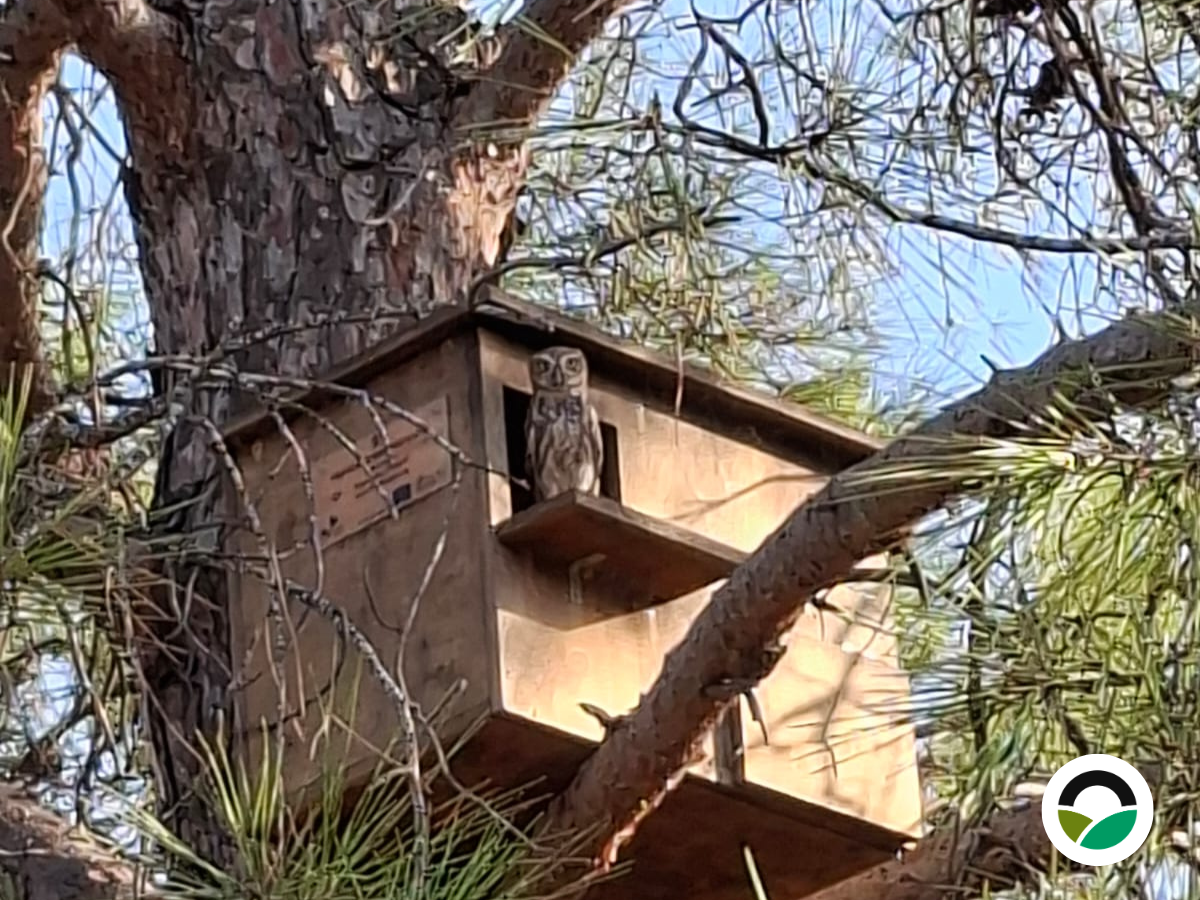
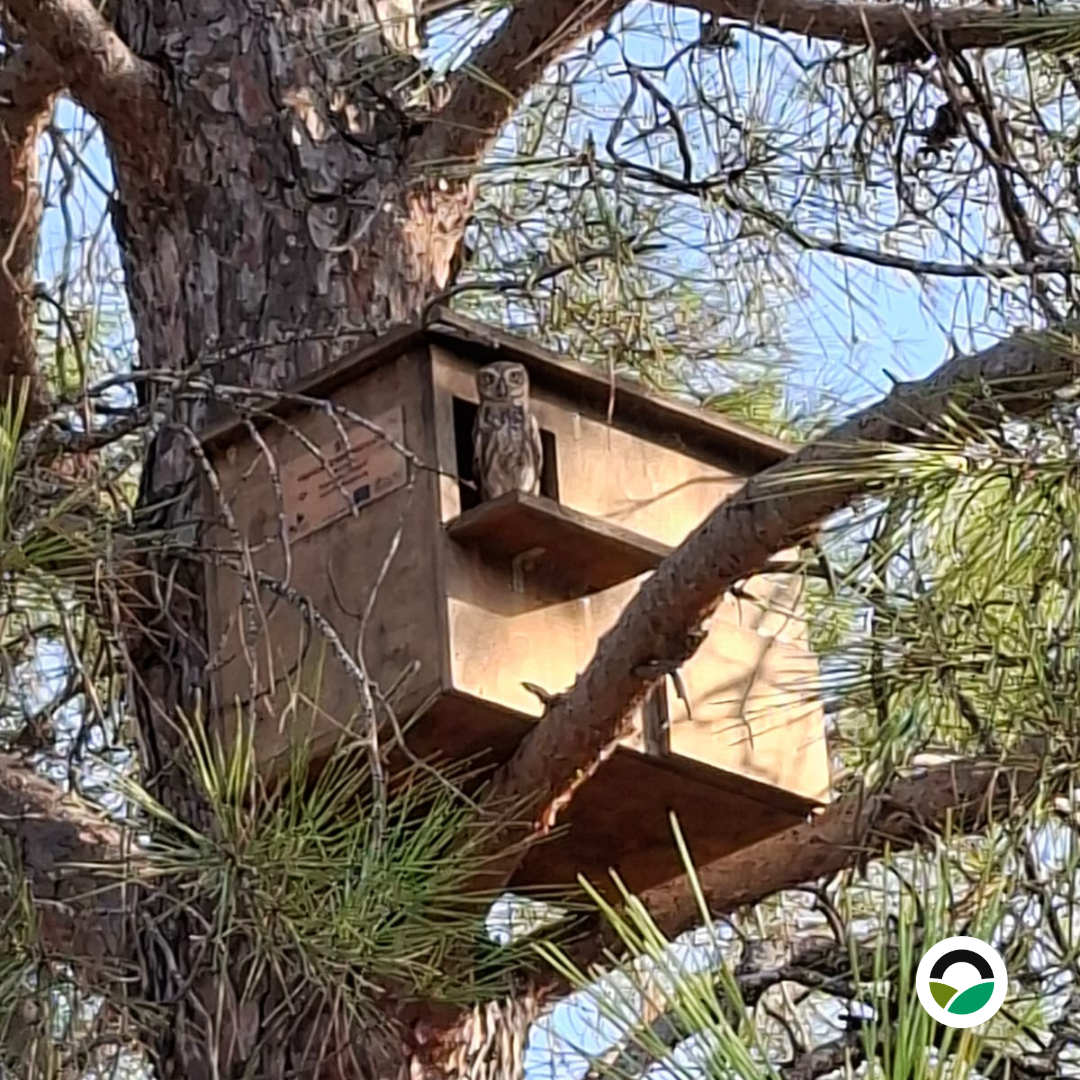
During the summer of 2026, we were delighted to observe a Little Owl (Athene noctua) occupying one of the nest boxes installed on a mature pine tree at the Big Farm. After quietly watching the nest box, the owl appeared at the entrance, confirming that it had adopted the structure as a shelter.
This observation demonstrates how habitat enhancement measures can provide valuable opportunities for native wildlife within regenerative farming landscapes.
Providing homes where natural cavities are scarce
Many birds naturally nest inside cavities found in old trees.
As mature trees become less common in some agricultural landscapes, suitable nesting sites can become increasingly limited for cavity-nesting species such as the Little Owl.
Artificial nest boxes help compensate for this loss by providing safe places for shelter and breeding. When installed in appropriate habitats and left undisturbed, they can successfully support native bird populations while increasing local biodiversity.
Nest boxes are a simple but effective conservation tool that complements the protection of natural habitats rather than replacing them.
Monitoring biodiversity at Mavronero
Installing nest boxes is only the first step.
Regular observations allow us to understand whether wildlife is using these structures and how different species respond to habitat improvements over time.
Each occupied nest box provides valuable information about the ecological health of the surrounding landscape and helps guide future conservation actions.
Long-term monitoring also allows us to document breeding success, seasonal occupancy and changes in local wildlife populations.
A successful occupation
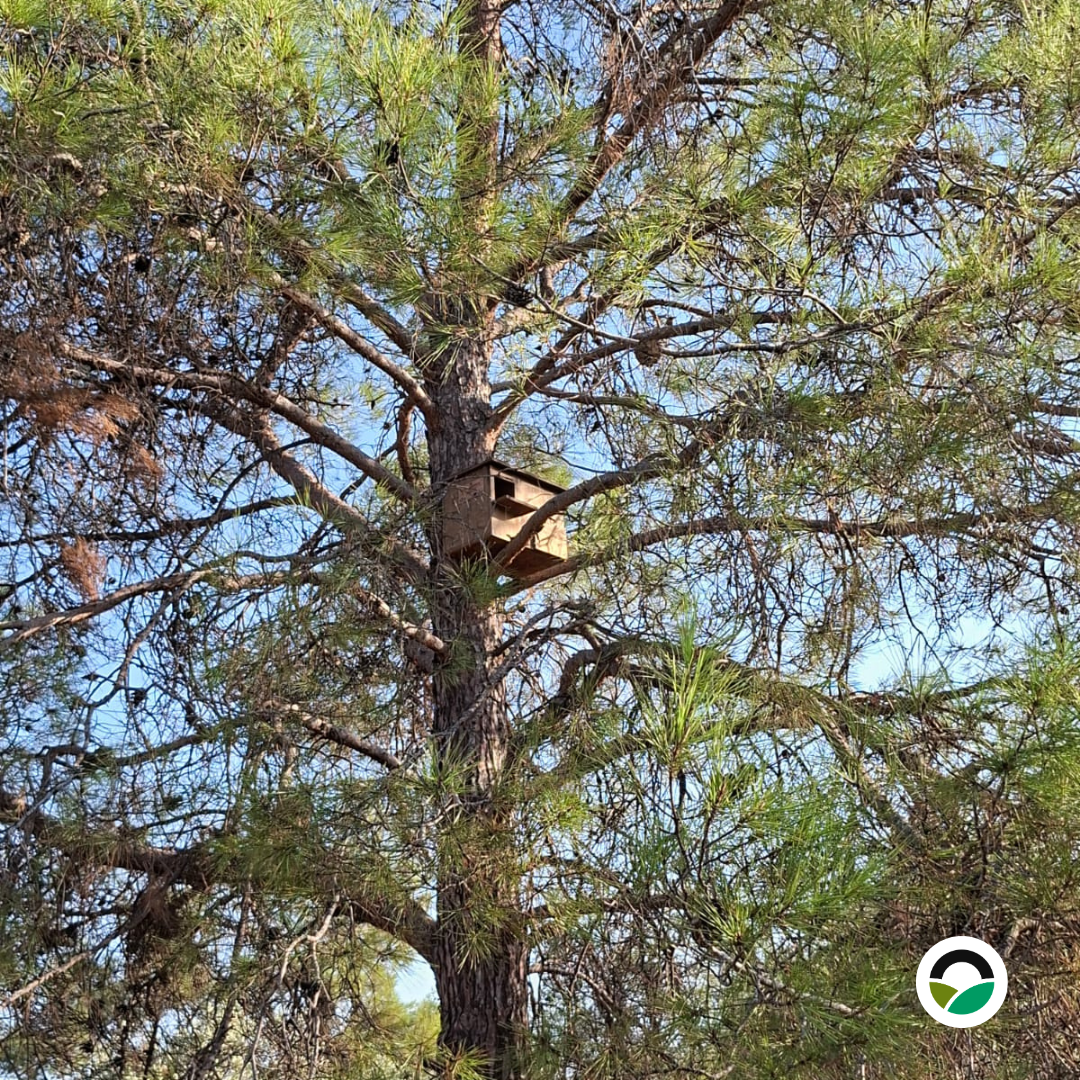
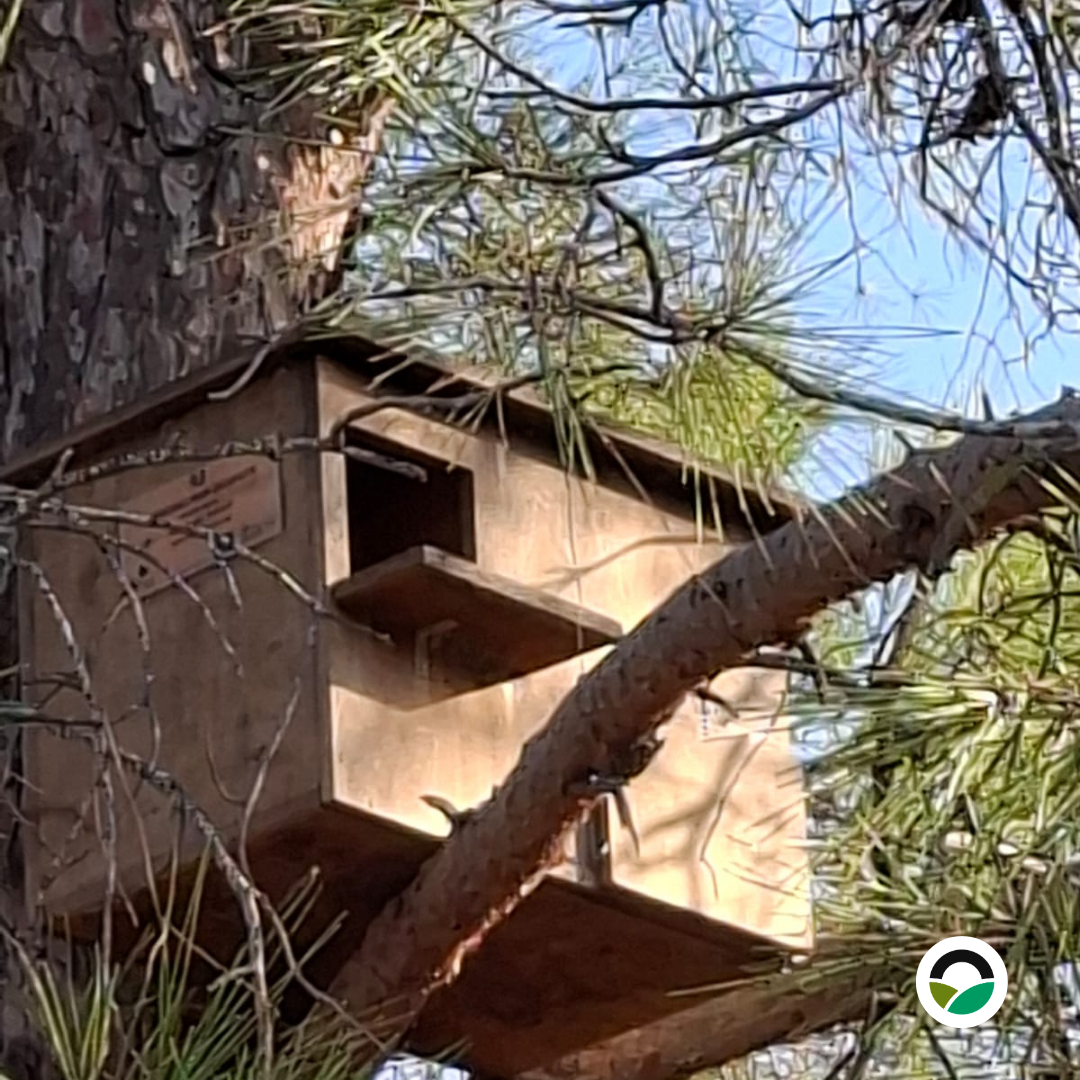
The nest box occupied by the Little Owl is installed on a mature pine tree within the Big Farm.
The surrounding landscape provides a mosaic of woodland, open farmland and natural vegetation that offers suitable hunting grounds together with safe nesting opportunities.
Observing the owl calmly watching from the entrance confirmed that the nest box had become part of its territory.
We will continue monitoring this nest box over the coming seasons while ensuring that the birds are not disturbed.
Nest boxes as biodiversity infrastructure
Nest boxes are one example of the habitat features that help create resilient ecosystems.
Together with mature trees, native vegetation, flowering plants, insect habitats and healthy soils, they form part of the ecological infrastructure that supports wildlife throughout the year.
By providing nesting opportunities for birds that naturally regulate insect and rodent populations, these small conservation measures contribute to healthier and more balanced ecosystems.
Supporting biodiversity is often achieved through many small actions working together rather than a single large intervention.
Observations at Mavronero
These photographs were taken during the summer of 2026 while monitoring the nest boxes installed at the Big Farm.
One of the boxes was found to be occupied by a Little Owl (Athene noctua), which briefly appeared at the entrance while observing its surroundings.
This is an encouraging indication that the nest boxes are providing suitable habitat for native wildlife and supporting biodiversity within the farm.
We look forward to following this nest box in future seasons and learning more about its resident.
Interesting facts
Little Owl nest boxes
- Little Owls readily use artificial nest boxes when suitable natural cavities are unavailable.
- Nest boxes should be installed in quiet locations and left undisturbed during the breeding season.
- A breeding pair may use the same nesting site for several consecutive years.
- Occupation may take months or even years after installation.
- Nest boxes can also benefit other native cavity-nesting bird species.
- Monitoring occupied nest boxes provides valuable information for conservation and biodiversity research.
Supporting wildlife through habitat enhancement
Healthy ecosystems depend on more than food and water.
Safe nesting sites, mature trees, diverse vegetation and connected habitats all contribute to supporting wildlife populations.
By combining habitat restoration with practical conservation measures such as nest boxes, regenerative farming creates landscapes where biodiversity can flourish alongside sustainable food production.
Every occupied nest box represents another small success in restoring ecological balance.
Conclusion
Finding a Little Owl using one of our nest boxes is a rewarding reminder that even simple conservation measures can make a meaningful difference.
Providing suitable nesting opportunities helps native wildlife establish, breed and thrive while strengthening the ecological resilience of Mediterranean landscapes.
At Mavronero Farm, every observation contributes to a better understanding of how regenerative land management supports biodiversity.
Further reading
Want to learn more about the Little Owl itself? Read our species profile: Little Owl (Athene noctua) (published March 2024)
