
Even the smallest native plants can have a remarkable impact on the health of an ecosystem.
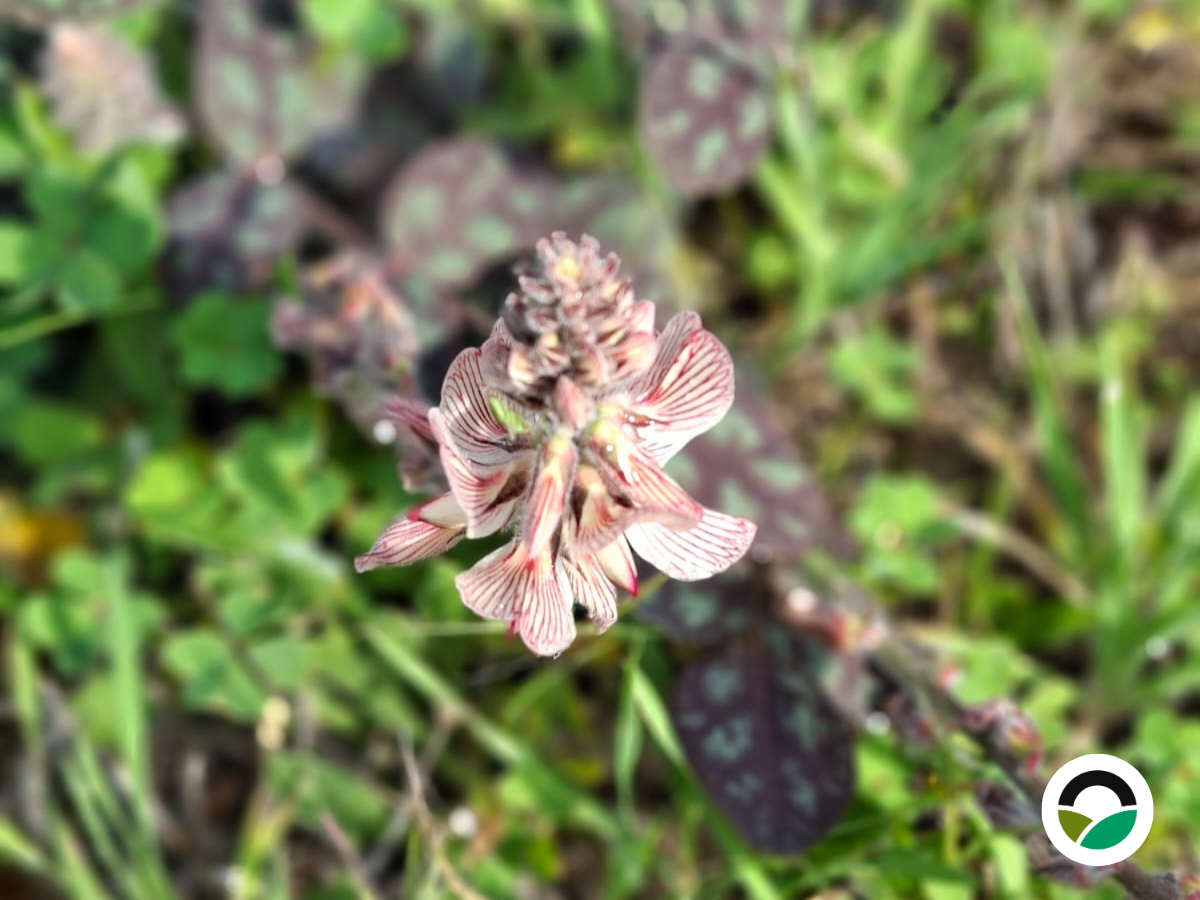
Growing naturally at Mavronero Farm, Onobrychis is one of the Mediterranean’s valuable wild legumes, producing delicate pink flowers while quietly improving the soil beneath our feet.
Although often overlooked, native species like this support pollinators, enrich soils and contribute to the resilience of Mediterranean landscapes.
What is Onobrychis?
Onobrychis is a genus of flowering plants in the legume family (Fabaceae), with numerous species distributed throughout Europe, western Asia and the eastern Mediterranean.
Several species are native — and some are endemic — to Cyprus, where they have evolved under the island’s dry Mediterranean climate.
Like other legumes, they form a natural partnership with beneficial soil bacteria that allows them to capture atmospheric nitrogen and enrich the soil naturally.
The plant is easily recognised by:
- delicate pink to pale rose flowers with darker veins
- compact flower spikes
- compound leaves with many small leaflets
- low-growing or upright stems depending on the species
- seed pods typical of the legume family
Where does it grow?
Native Onobrychis species are well adapted to dry Mediterranean environments.
In Cyprus they commonly occur in:
- olive groves
- open grasslands
- rocky slopes
- field margins
- abandoned farmland
- river terraces
- Mediterranean scrub
Their deep root systems allow them to survive long dry summers while continuing to support surrounding biodiversity.
A natural soil improver
One of the most valuable characteristics of Onobrychis is its ability to improve soil fertility naturally.
Like many legumes, its roots host nitrogen-fixing bacteria that convert atmospheric nitrogen into forms plants can use.
This natural process:
- increases soil fertility
- supports neighbouring vegetation
- reduces dependence on synthetic fertilisers
- improves long-term soil health
- contributes to regenerative farming systems
Healthy soils begin with healthy biological communities below ground.
Supporting pollinators
Its flowers are rich in nectar and attract numerous beneficial insects.
Visitors commonly include:
- honey bees
- solitary bees
- bumblebees
- hoverflies
- butterflies
- beetles
- other native pollinators
Even small patches of native flowering plants become valuable feeding stations during the Mediterranean summer.
Observations at Mavronero
The Onobrychis photographed at Mavronero was growing naturally among other native vegetation without cultivation.
Its flowering demonstrates how native plants continue supporting insects even during the hottest period of the year, when many annual species have already completed their life cycle.
Every native flower contributes to the ecological network that keeps Mediterranean farms healthy and resilient.
Why native legumes matter
Native legumes provide benefits far beyond their flowers.
They:
- improve soil naturally
- support pollinator populations
- stabilise soils against erosion
- increase plant diversity
- provide habitat for beneficial insects
- contribute to healthier agricultural ecosystems
Protecting these species means protecting the ecological processes that sustain Mediterranean landscapes.
Interesting facts
- Onobrychis belongs to the pea and bean family (Fabaceae).
- Legumes naturally enrich soils through nitrogen fixation.
- Several Onobrychis species are native to Cyprus.
- Some species are endemic and occur nowhere else in the world.
- Their flowers are particularly attractive to bees.
- They thrive in dry, nutrient-poor soils.
- They have been part of Mediterranean grasslands for thousands of years.
Conclusion
Native plants such as Onobrychis show that healthy ecosystems depend on far more than trees alone.
By improving soil, feeding pollinators and supporting biodiversity, these modest wildflowers make an essential contribution to Mediterranean landscapes.
At Mavronero Farm, protecting native flora is an important part of building resilient ecosystems where agriculture and biodiversity can thrive together.
