
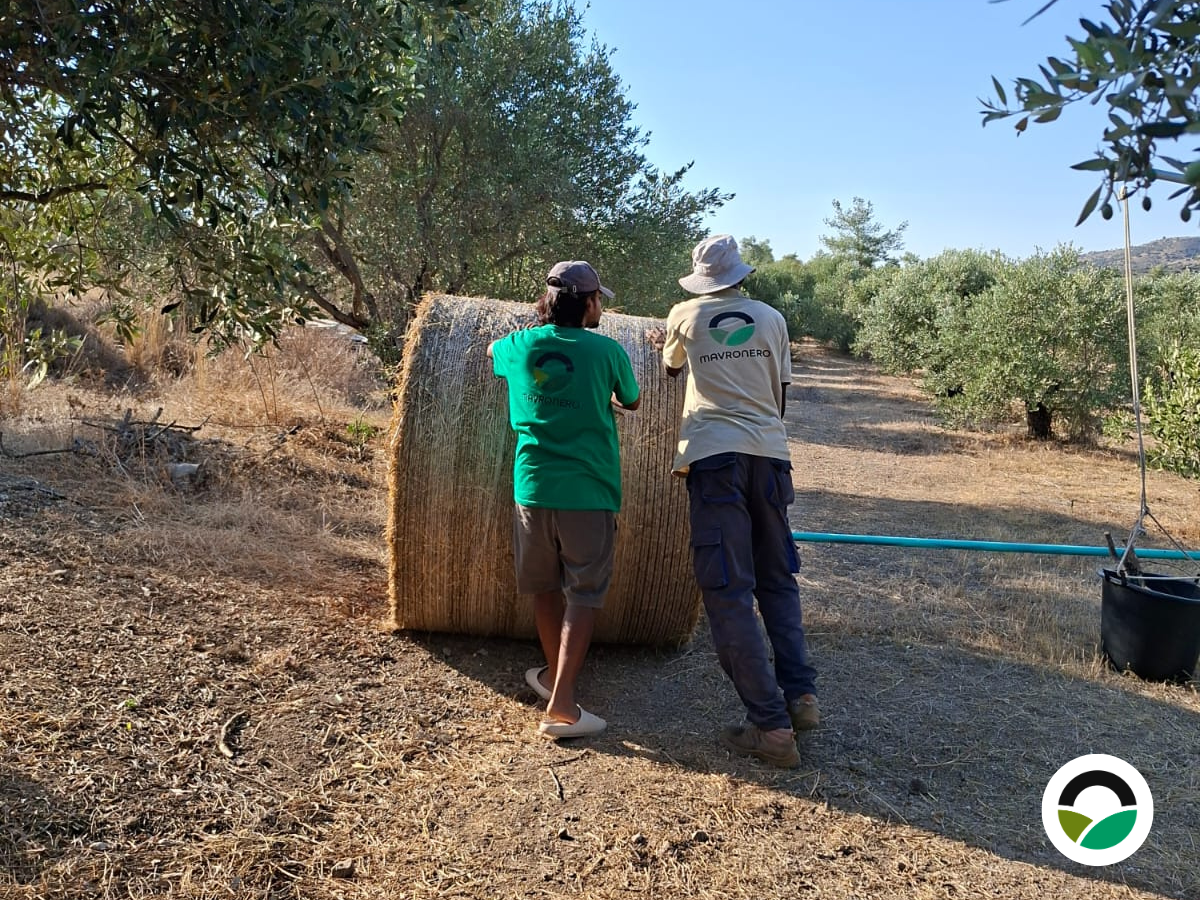
A simple resource has arrived at Mavronero Farm, but one that plays an important role in regenerative agriculture.
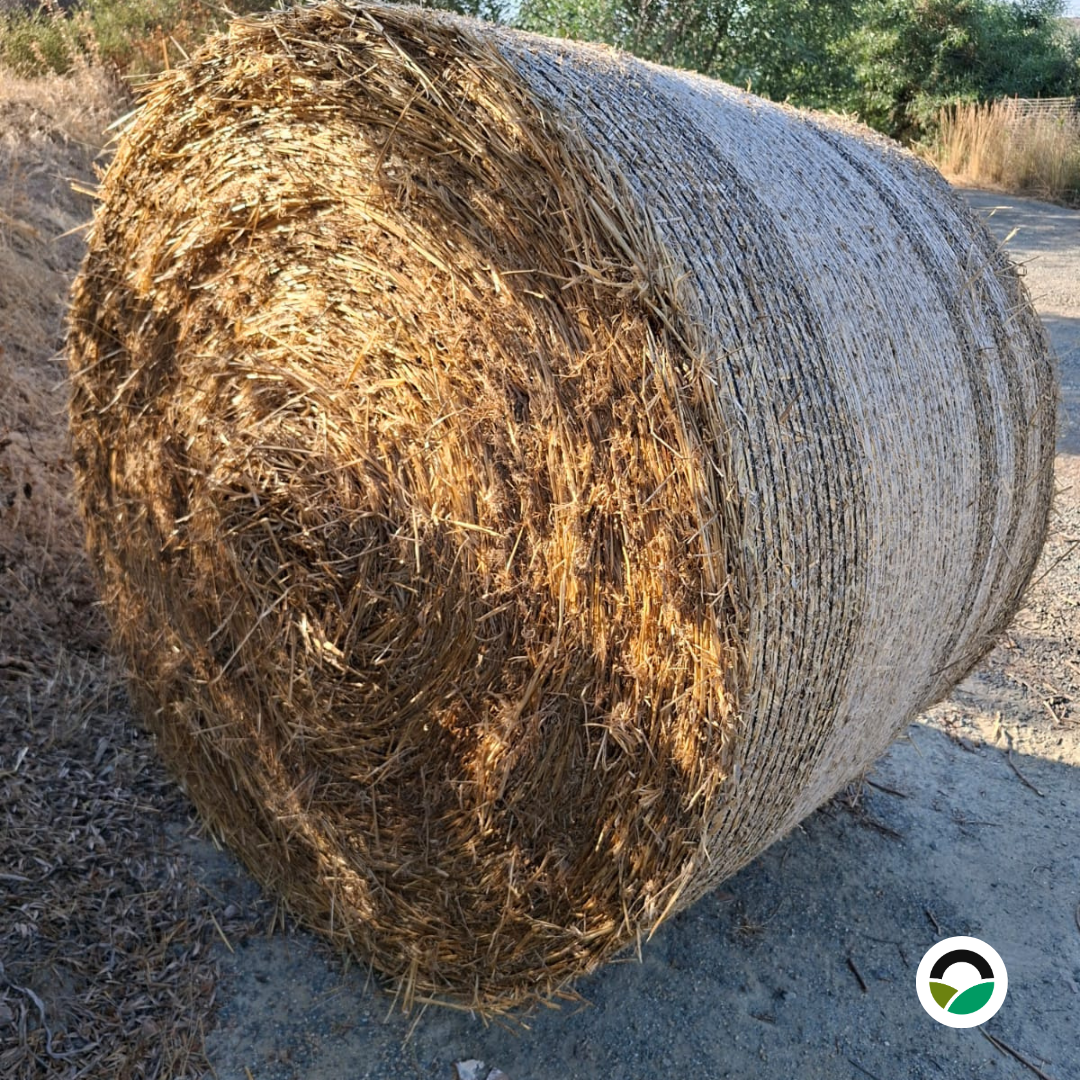
This week, our first hay bale was brought to the farm and carefully positioned within the landscape. While it may seem like a small addition, it marks another step in strengthening the ecological processes that support soil health and long-term resilience.
At Mavronero, even the most basic materials are part of a broader system.
The role of hay in regenerative farming
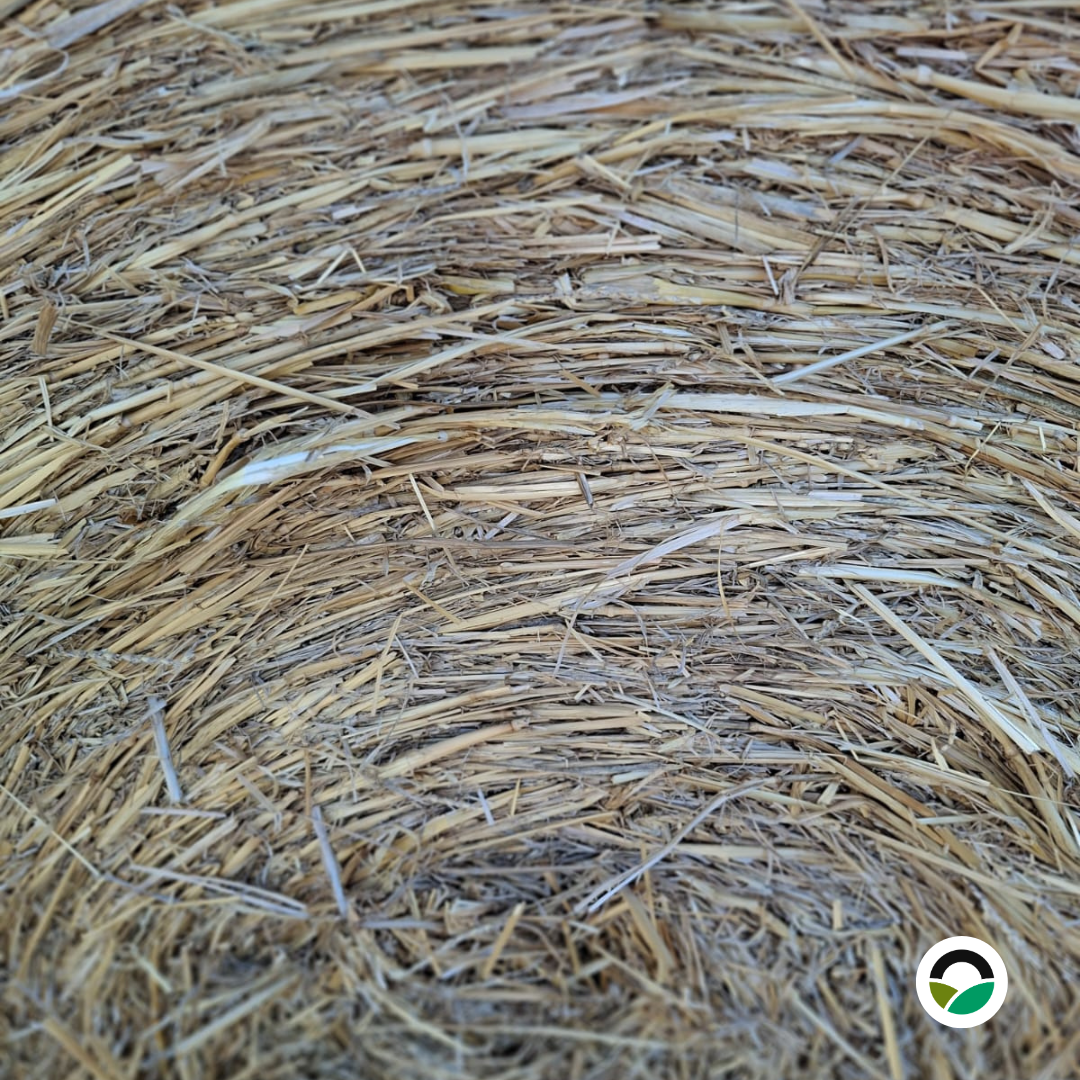
Hay is far more than dried grass. In regenerative agriculture, it becomes a multifunctional tool that supports both soil and ecosystem health.
One of its primary uses is as mulch. By covering the soil surface, hay helps reduce evaporation, retain moisture and regulate temperature, especially important under the intense Mediterranean sun. This protective layer also shields the soil from erosion and prevents it from becoming compacted or degraded.
Mulching with organic material creates more stable conditions for microorganisms, which are essential for nutrient cycling and overall soil fertility.
Improving soil health through organic matter
Part of the hay will also be used in composting processes.
As it decomposes, hay contributes carbon-rich organic matter that improves soil structure, increases water retention and enhances biological activity. Over time, this leads to healthier, more fertile soils that require fewer external inputs.
This gradual transformation is a key principle of regenerative farming: building soil rather than depleting it.
Supporting resilience in Mediterranean conditions
Farming in Mediterranean climates presents specific challenges, particularly during the dry summer months. High temperatures and limited rainfall can quickly reduce soil moisture and stress plants.
Using hay as mulch helps mitigate these conditions by creating a buffer between the soil and the environment. It slows down water loss, moderates temperature extremes and supports more stable growing conditions.
These practices are especially important for young plants and newly established areas of the farm.
Observations at Mavronero
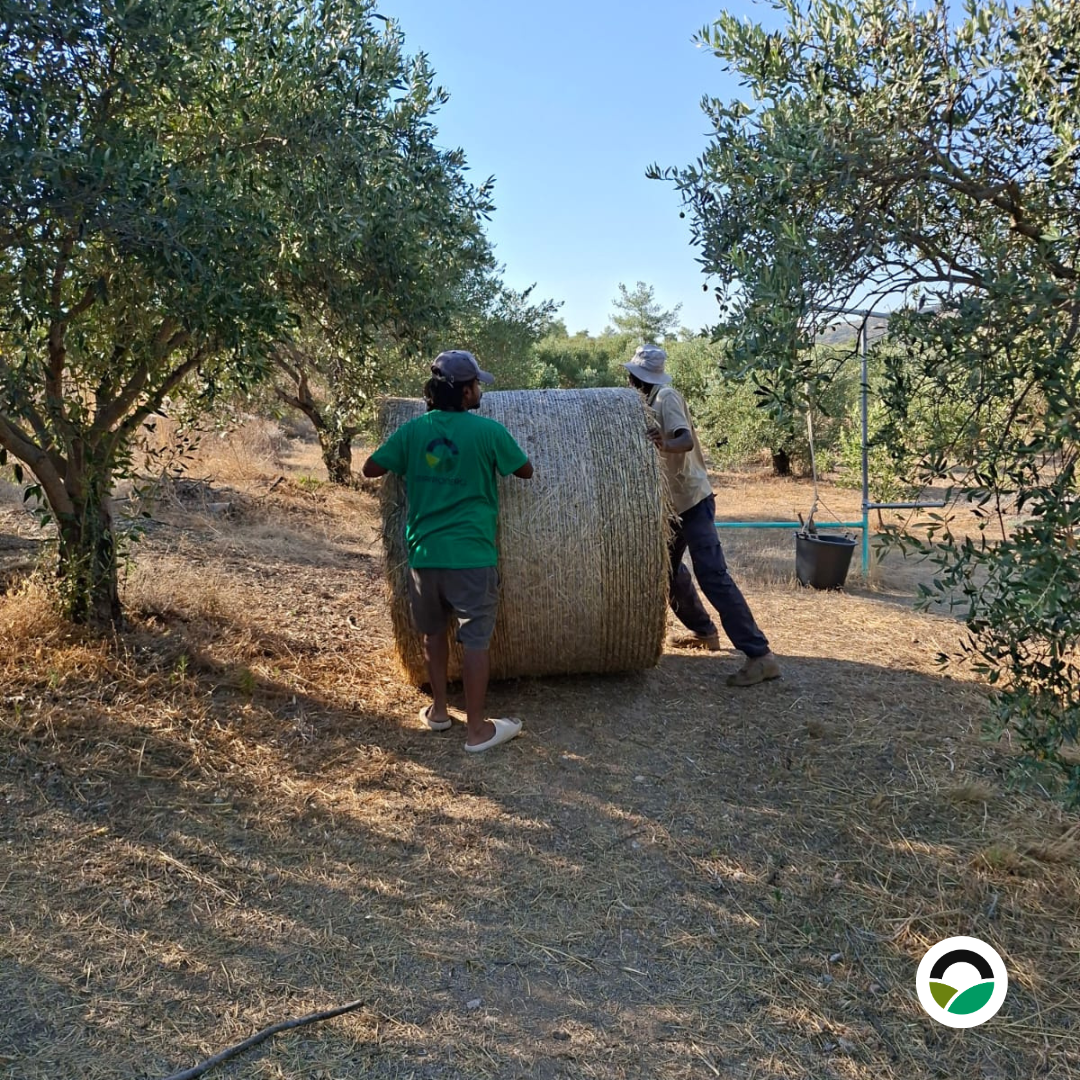
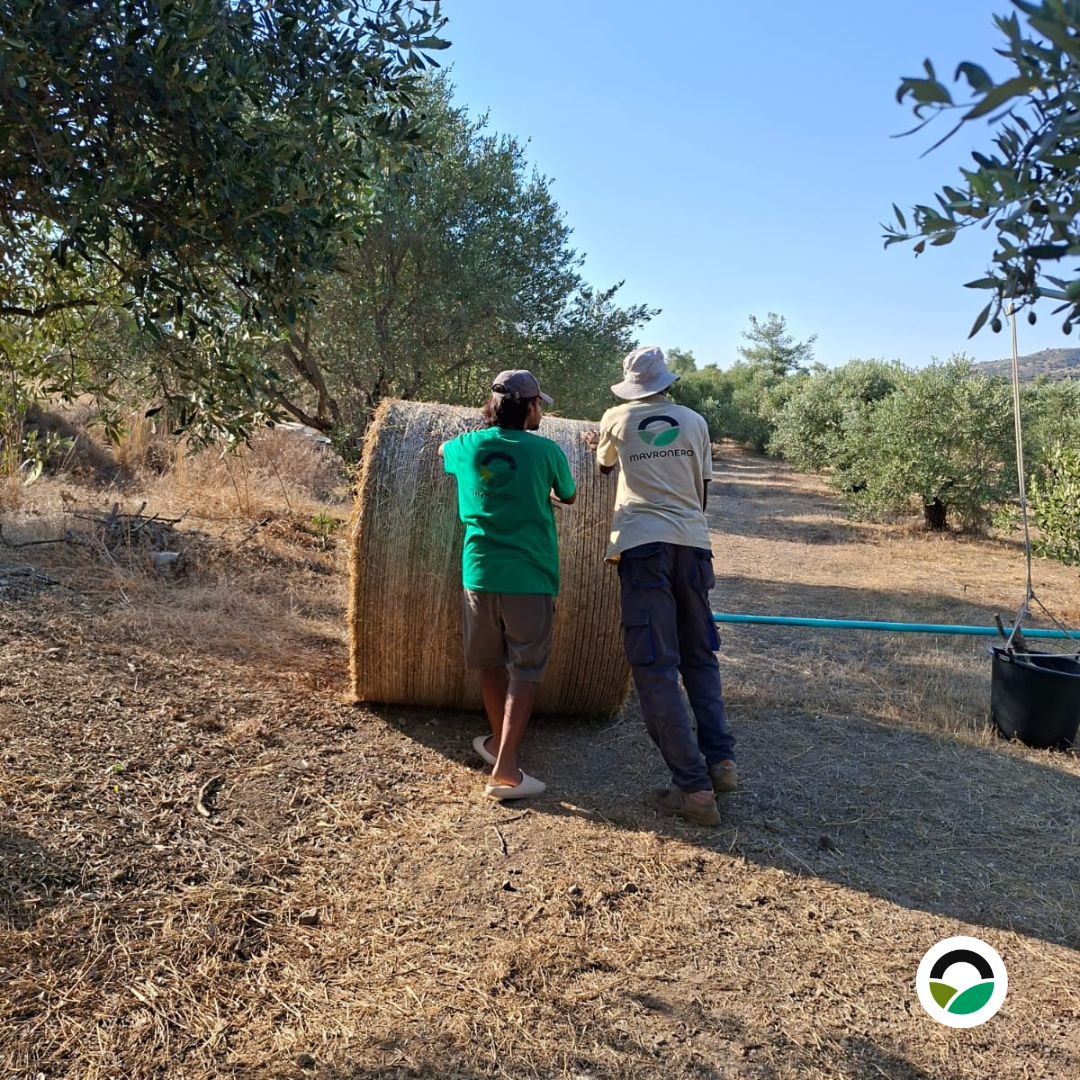
The hay bale was moved into place by Zeeshan and Brison, who carefully rolled it across the farm to its designated area.
Once positioned, it becomes part of an ongoing process. Sections of the bale will gradually be used across different areas of the farm, depending on seasonal needs and ongoing observations.
As with all regenerative practices at Mavronero, its use will evolve over time. The farm itself guides how and where each resource is applied.
Interesting facts
- Hay used as mulch can significantly reduce soil water evaporation.
- Organic mulches help suppress weed growth naturally, reducing the need for intervention.
- Decomposing hay feeds soil microorganisms, improving nutrient availability.
- Mulching contributes to long-term carbon sequestration in soils.
- Hay can also be used in composting systems to balance carbon and nitrogen inputs.
Working with natural cycles
Regenerative farming is based on observing and working with natural processes rather than against them.
Introducing hay into the system is not just about adding material, it is about supporting cycles of growth, decomposition and renewal. Each application contributes to a more balanced and resilient ecosystem.
At Mavronero Farm, even a single bale of hay becomes part of a larger story: building soil, supporting biodiversity and creating a landscape that can thrive over time.
Conclusion
The arrival of this first hay bale represents a small but meaningful step in the ongoing development of Mavronero Farm.
Through simple, thoughtful practices, we continue to strengthen the foundation of the farm, healthy soil, balanced ecosystems and long-term resilience.
What may appear as a modest input today will contribute to the future health of the land.
