
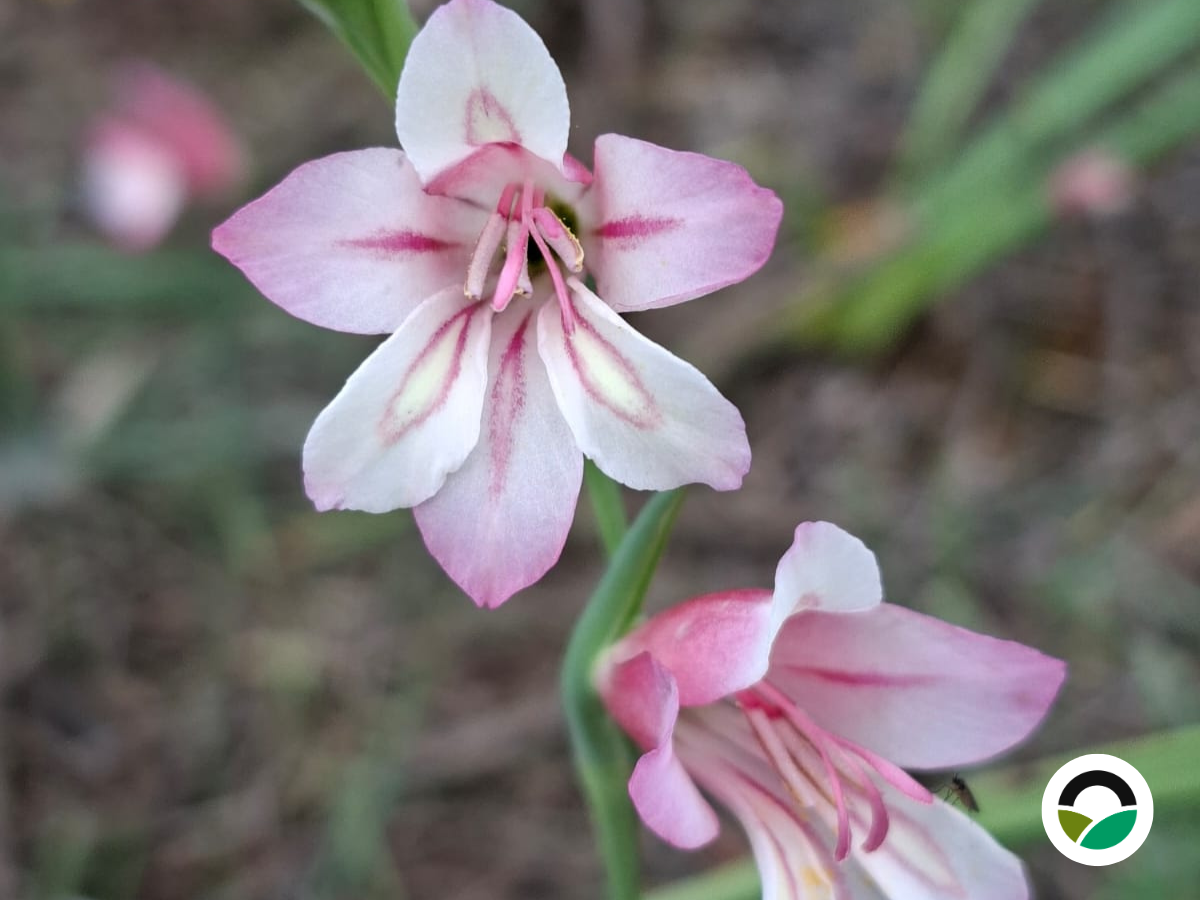
Italian gladiolus (Gladiolus italicus) is among the most characteristic spring-flowering plants found throughout Mediterranean ecosystems. At Mavronero, these elegant wildflowers develop naturally within herbaceous vegetation growing between olive groves, agricultural margins, and semi-natural habitats.
The species forms part of the seasonal flowering communities that emerge following winter rainfall and mild spring temperatures. These flowering plants contribute to the biodiversity and ecological complexity of Mediterranean agricultural landscapes where natural vegetation continues to coexist alongside cultivation.
Italian gladiolus in Mediterranean ecosystems
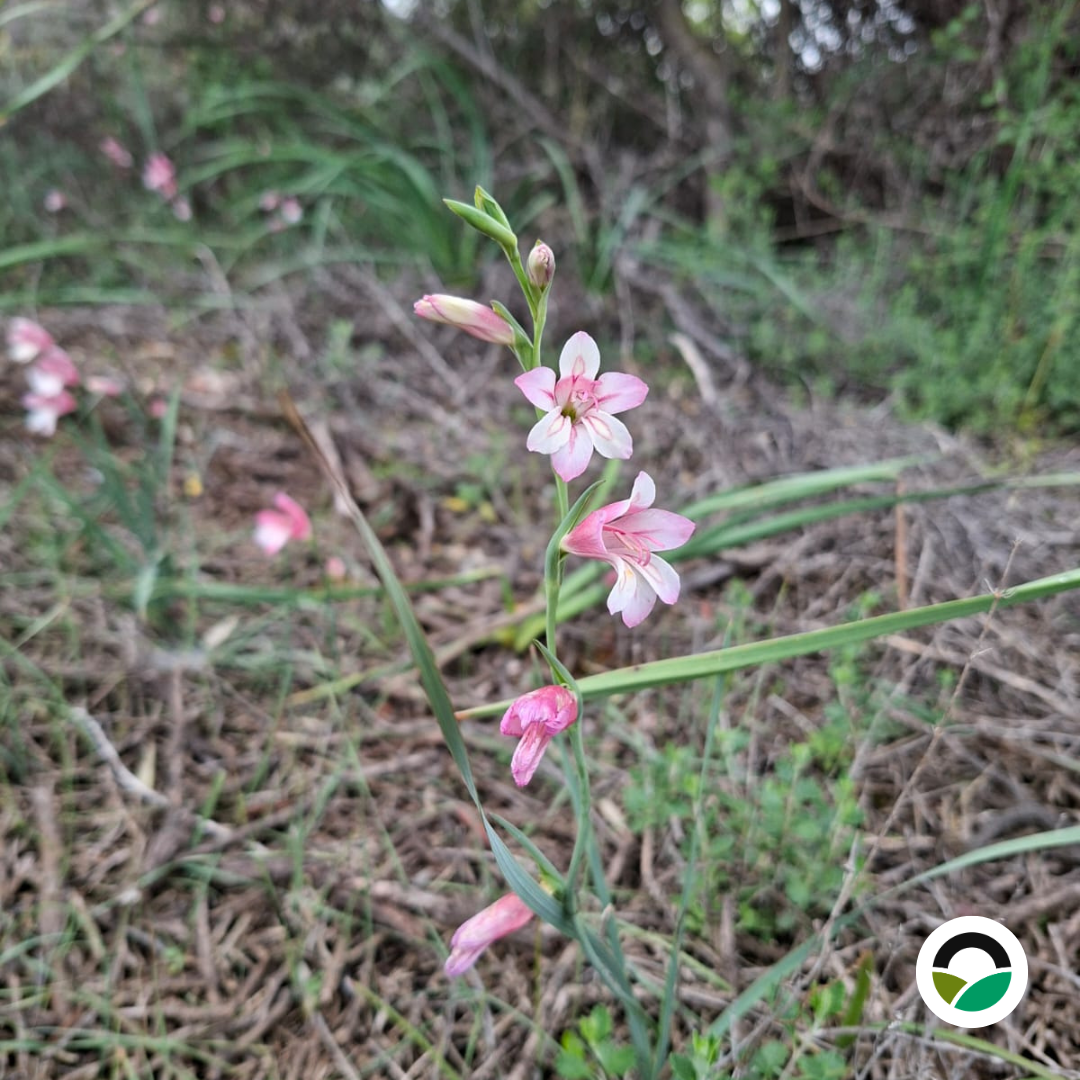
Gladiolus italicus belongs to the iris family (Iridaceae), a group of flowering plants widely distributed across Europe, North Africa, and the Mediterranean Basin. The species is easily recognised by its slender stems, sword-shaped leaves, and delicate pink flowers marked with darker pink veins.
Across Mediterranean environments, Italian gladiolus can commonly be found in:
- olive groves
- herbaceous vegetation systems
- agricultural field margins
- seasonal grasslands
- semi-natural habitats
- low-intervention cultivated landscapes
Its flowering period typically occurs during spring, when seasonal vegetation reaches peak development following winter rainfall.
The species is well adapted to Mediterranean climatic conditions and survives summer drought through underground storage structures that allow growth to resume during favourable seasons.
Ecological role and biodiversity value
Although often appreciated primarily for its appearance, Italian gladiolus forms part of broader ecological processes within Mediterranean ecosystems.
Its ecological contributions include:
- seasonal flowering diversity
- habitat complexity within vegetation communities
- support of pollinator activity
- biodiversity continuity within cultivated landscapes
- ecological resilience of native plant communities
- seasonal indicators of environmental change
The flowering season of Gladiolus italicus coincides with increased activity among insects and other wildlife species that depend upon spring vegetation development.
At Mavronero, observations of native flowering plants help document the ecological relationships that develop naturally within agricultural systems where habitat continuity is maintained.
Seasonal flowering activity at Mavronero
Mediterranean landscapes experience strong seasonal fluctuations driven by rainfall, temperature, and sunlight availability. During spring, herbaceous vegetation develops rapidly, creating favourable conditions for numerous flowering species.
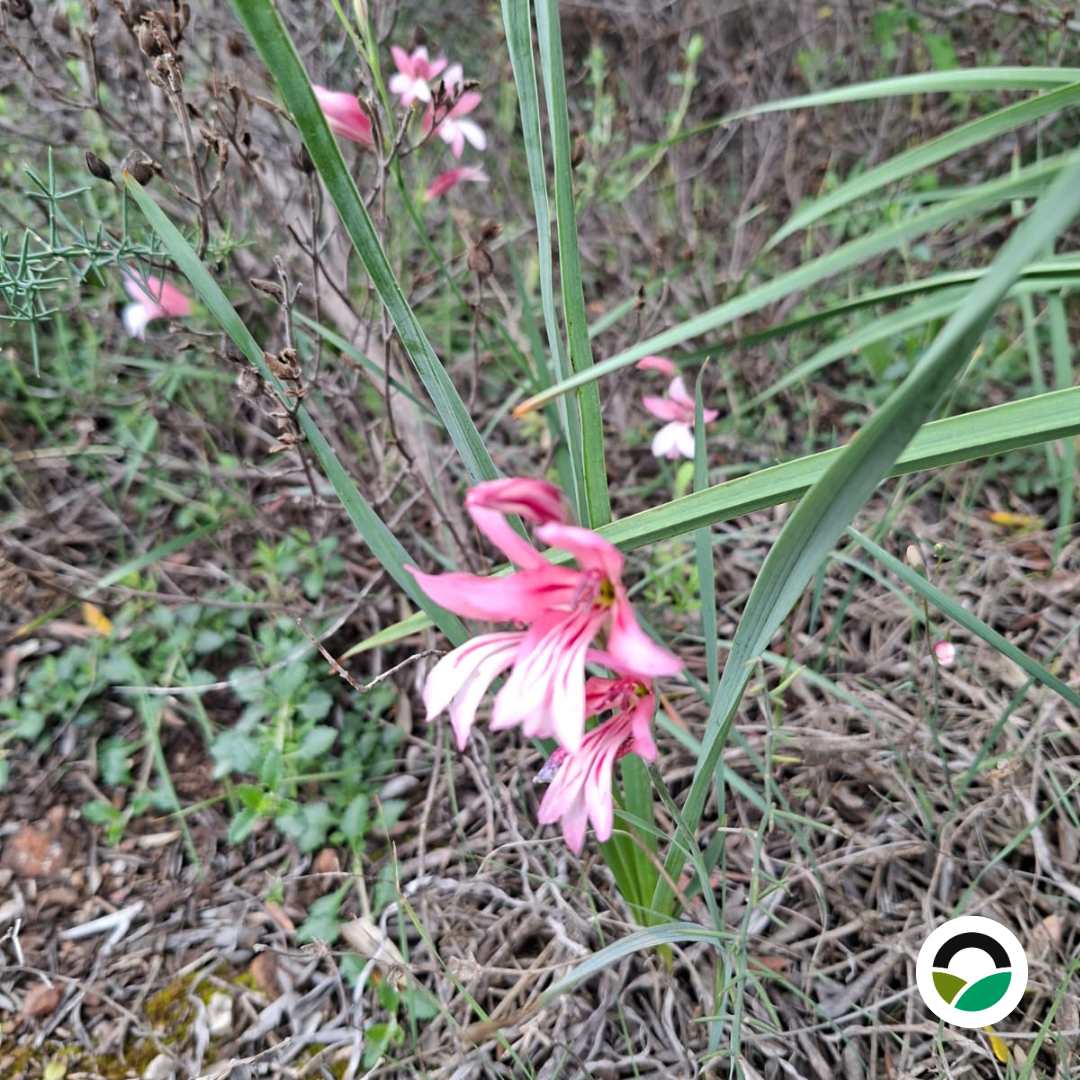
Italian gladiolus is closely associated with these seasonal vegetation communities and frequently appears alongside other native wildflowers growing between cultivated areas and natural habitats.
Environmental observations at Mavronero continue recording:
- native flowering plants
- seasonal vegetation development
- pollinator activity
- herbaceous habitat dynamics
- biodiversity continuity within cultivated environments
- ecological adaptation within Mediterranean climates
These observations provide valuable insight into the environmental processes that shape Mediterranean biodiversity throughout the year.
Environmental observations at Mavronero
The presence of Italian gladiolus within the Mavronero landscape highlights the ecological value of maintaining habitat diversity within cultivated environments.
Rather than functioning as isolated production systems, agricultural landscapes can support a wide variety of native plant species when natural vegetation is allowed to develop alongside cultivation.
The coexistence of flowering plants, insects, birds, reptiles, and agricultural activity contributes to the ecological complexity that characterises Mediterranean ecosystems.
Through ongoing environmental monitoring, Mavronero continues documenting the biodiversity supported by low-intervention land management practices and seasonal habitat continuity.
Conclusion
Italian gladiolus (Gladiolus italicus) forms an important part of Mediterranean spring flora and contributes to the biodiversity of agricultural and semi-natural landscapes.
Its seasonal flowering reflects the ecological relationships that connect climate, vegetation, wildlife, and traditional agricultural environments. Observations such as these help document the natural processes that continue to shape Mediterranean ecosystems and highlight the importance of maintaining habitat continuity within cultivated landscapes.
