
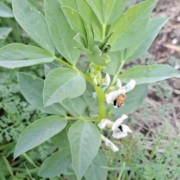
Our first sowing of broad beans this season — planted in October near the farmhouse — is growing steadily, bringing early signs of life to the winter fields.
Broad beans (Vicia faba) are one of the traditional cool-season crops of the Mediterranean. They thrive in mild winters, help enrich the soil, and provide food not only for us but also for the ecosystem around them. Their sturdy stems and soft leaves may look simple, but there is a lot happening between them.
As soon as the plants began to establish, the space around them turned lively. Bees visit the flowers in search of nectar, helping with pollination. Ladybugs patrol the leaves, keeping aphids in check. Parasitoid wasps — tiny, almost invisible at first glance — are also on duty, quietly supporting natural pest control.
Together, these small helpers create a balanced environment where the plants can grow with strength and without the need for intervention.
Nutritional value of broad beans
Broad beans are known for their high nutritional density, especially when harvested young. They are a valuable source of:
- Protein
- Dietary fiber
- B vitamins such as folate
- Minerals including iron, potassium, magnesium, and phosphorus
- Antioxidant phytonutrients
A staple in Mediterranean diets for centuries, they can be enjoyed fresh in spring or dried for long-term storage.

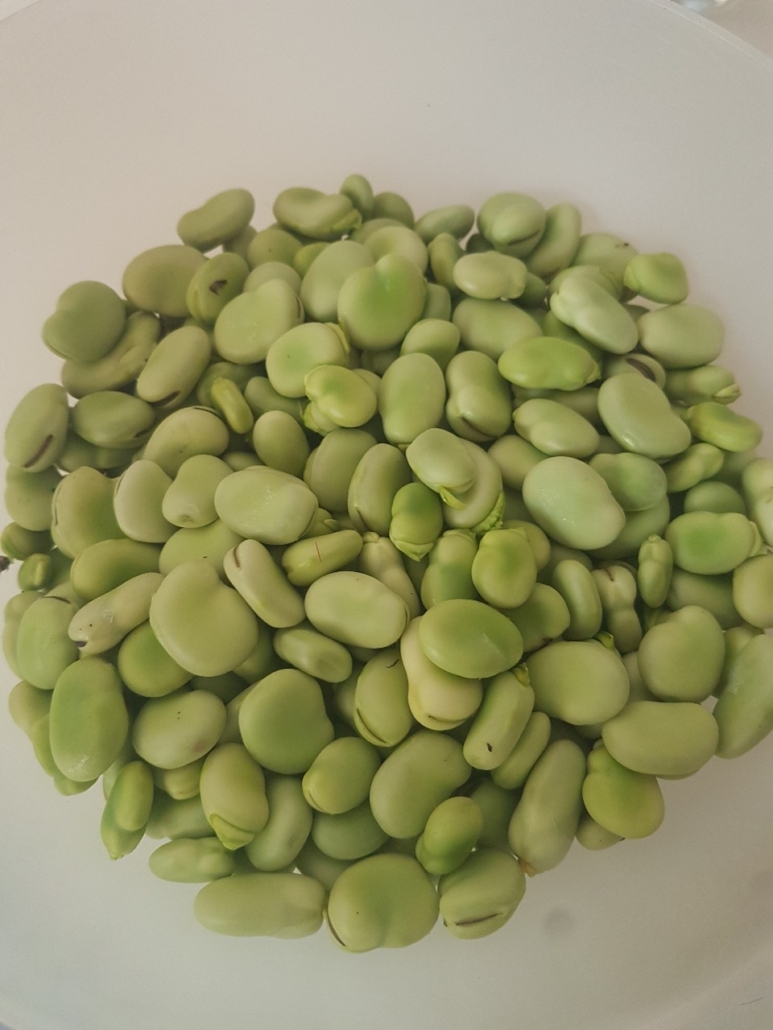
How broad beans can be cooked
Broad beans play an important role in Mediterranean and Middle Eastern cuisines. Young beans can be eaten fresh or lightly boiled, while mature beans — fresh or dried — are ideal for stews, purées, and hearty dishes.
Cooking methods include boiling, sautéing, stewing, blending into dips, or pairing with herbs and olive oil. Their mild taste makes them suitable for simple everyday meals or more elaborate traditional recipes.
Recipe ideas
Cypriot-Style broad beans with tomato and herbs
A traditional spring dish in rural Cyprus, cooked gently in olive oil and tomato.
Ingredients:
Broad beans, onion, garlic, ripe tomato or tomato paste, olive oil, dill or parsley, lemon, salt and pepper.
Preparation:
- Sauté chopped onion in olive oil until soft.
- Add garlic briefly.
- Add broad beans and stir.
- Add tomato (fresh or paste diluted with water).
- Season and simmer until beans soften and sauce thickens.
- Finish with dill or parsley and a squeeze of lemon.
This classic recipe highlights how broad beans absorb flavour and pair beautifully with herbs and citrus.
Italian broad bean purée with sautéed greens
A traditional dish from Puglia, made with mature or dried broad beans.
Ingredients:
Dried broad beans (soaked overnight), onion, olive oil, salt, wild chicory or other bitter greens.
Preparation:
- Boil the soaked beans with onion until very soft.
- Mash or blend into a creamy purée with olive oil and salt.
- Cook the chicory until tender, then sauté in olive oil.
- Serve the purée topped with the greens and olive oil.
This dish shows how broad beans are used in rustic Mediterranean cooking — simple ingredients transformed into something nourishing and comforting.
Growing broad beans
Broad beans are well-suited to Mediterranean climates and can be grown with relatively low maintenance.
Sowing
Planted in autumn (October–November), they establish roots before winter.
Soil
They tolerate various soils and naturally fix nitrogen, enriching the land.
Watering
Moderate watering is enough; once established, they thrive in cool winter conditions.
Pollination and pest control
Bees support pollination, while ladybugs and parasitoid wasps help maintain natural pest balance.
Harvest
Harvest typically begins in early spring. Young beans are tender; mature beans offer a deeper, earthier flavour.
Conclusion
Our first broad beans of the season remind us how a single crop can activate an entire ecosystem: enriching soil, inviting pollinators, supporting beneficial insects, and offering a nutritious food source.
As the season progresses, we look forward to following their growth and the life they continue to attract around them.
Sources
FAO – Broad Bean Cultivation Guidelines
EUFIC – Legume Nutritional Information
UC Davis ANR – Beneficial Insects in Mediterranean Crops
BBC Good Food – Broad beans: how to prepare and cook
Cyprus Food Virtual Museum – Koukia Yahni (Broad Beans in Tomato Sauce)