
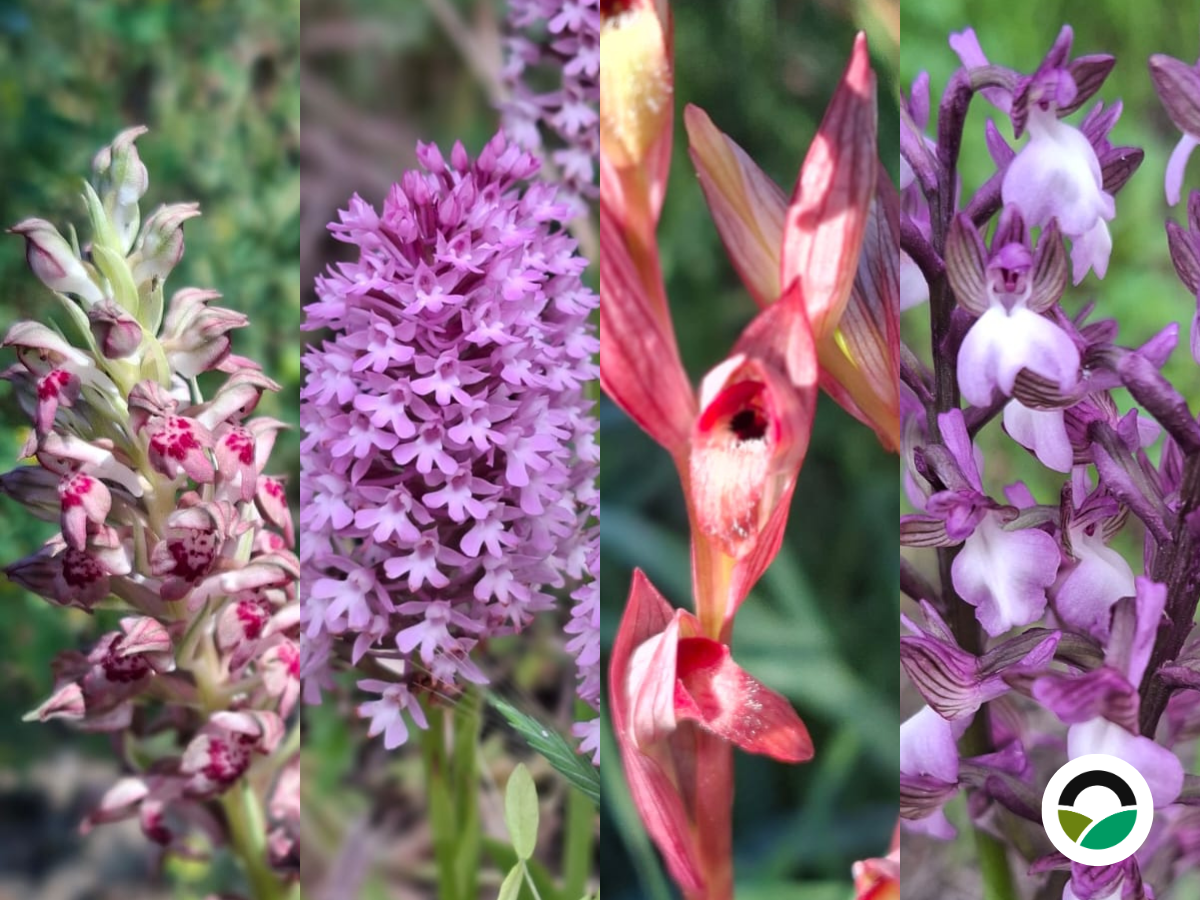
Within the Mediterranean landscape surrounding Mavronero, seasonal wild orchids emerge each spring as part of a broader ecological cycle shaped by soil conditions, biodiversity, climate, moisture availability, and long-term environmental continuity.
These terrestrial orchids develop naturally among olive groves, grasslands, woodland edges, and low-intervention cultivated areas where seasonal vegetation cycles remain relatively undisturbed.
Although often associated primarily with ornamental value, Mediterranean wild orchids are ecologically significant flowering species closely connected to pollinator interactions, habitat stability, soil ecology, and biodiversity preservation.
The presence of native orchids within cultivated Mediterranean landscapes may also indicate relatively stable environmental conditions and low levels of intensive landscape disturbance.
Over recent observation periods at Mavronero, several species of Mediterranean terrestrial orchids have been documented across different areas of the surrounding landscape.
Mediterranean terrestrial orchids
Mediterranean orchids belong to the Orchidaceae family, one of the most diverse flowering plant families worldwide. Unlike tropical epiphytic orchids commonly cultivated indoors, Mediterranean orchids are terrestrial species that grow directly within soil ecosystems.
Their development depends on complex ecological interactions involving:
- soil microorganisms
- seasonal moisture conditions
- sunlight exposure
- pollinator activity
- habitat continuity
- vegetation balance
Many Mediterranean orchid species have evolved highly specialized flowering structures and reproductive strategies adapted to specific pollinators and environmental conditions.
Because of these ecological relationships, orchid populations are often highly sensitive to environmental disturbance and habitat modification.
Ecological significance within Mediterranean landscapes
Wild orchids contribute to the ecological diversity of Mediterranean environments through their interactions with surrounding plant communities, pollinating insects, soil systems, and seasonal flowering cycles.
Their presence may support broader ecological processes involving:
- pollinator diversity
- seasonal biodiversity cycles
- habitat connectivity
- vegetation variation
- ecological resilience
- environmental continuity
Mediterranean orchids are frequently associated with landscapes where low-intensity agricultural practices allow natural vegetation cycles and ecological interactions to persist over time.
At Mavronero, these observations form part of a broader cultivation approach centered on coexistence between agricultural activity and surrounding ecological systems.
Habitat sensitivity and environmental conditions
Mediterranean terrestrial orchids are environmentally sensitive plants whose populations may fluctuate depending on annual environmental conditions.
Their long-term persistence often depends on:
- stable soil structure
- seasonal moisture availability
- limited soil disturbance
- low-intensity cultivation
- habitat continuity
- surrounding biodiversity
Excessive land modification, intensive agricultural intervention, vegetation removal, and ecosystem fragmentation may negatively affect orchid populations and flowering patterns.
For this reason, the observation of native orchid species is often associated with landscapes where ecological continuity remains relatively intact.
Seasonal flowering within Mediterranean ecosystems
Most Mediterranean orchids flower during spring, when temperature, moisture, and seasonal sunlight conditions support flowering development and pollinator activity.
During this seasonal period, flowering orchids contribute to the visual and ecological diversity of Mediterranean rural environments.
At Mavronero, orchid observations form part of ongoing seasonal field observation documenting how native species interact with surrounding vegetation systems throughout the year.
These observations also contribute to a broader understanding of:
- flowering cycles
- habitat variation
- pollinator presence
- biodiversity dynamics
- seasonal environmental transitions
- ecological adaptation within cultivated landscapes
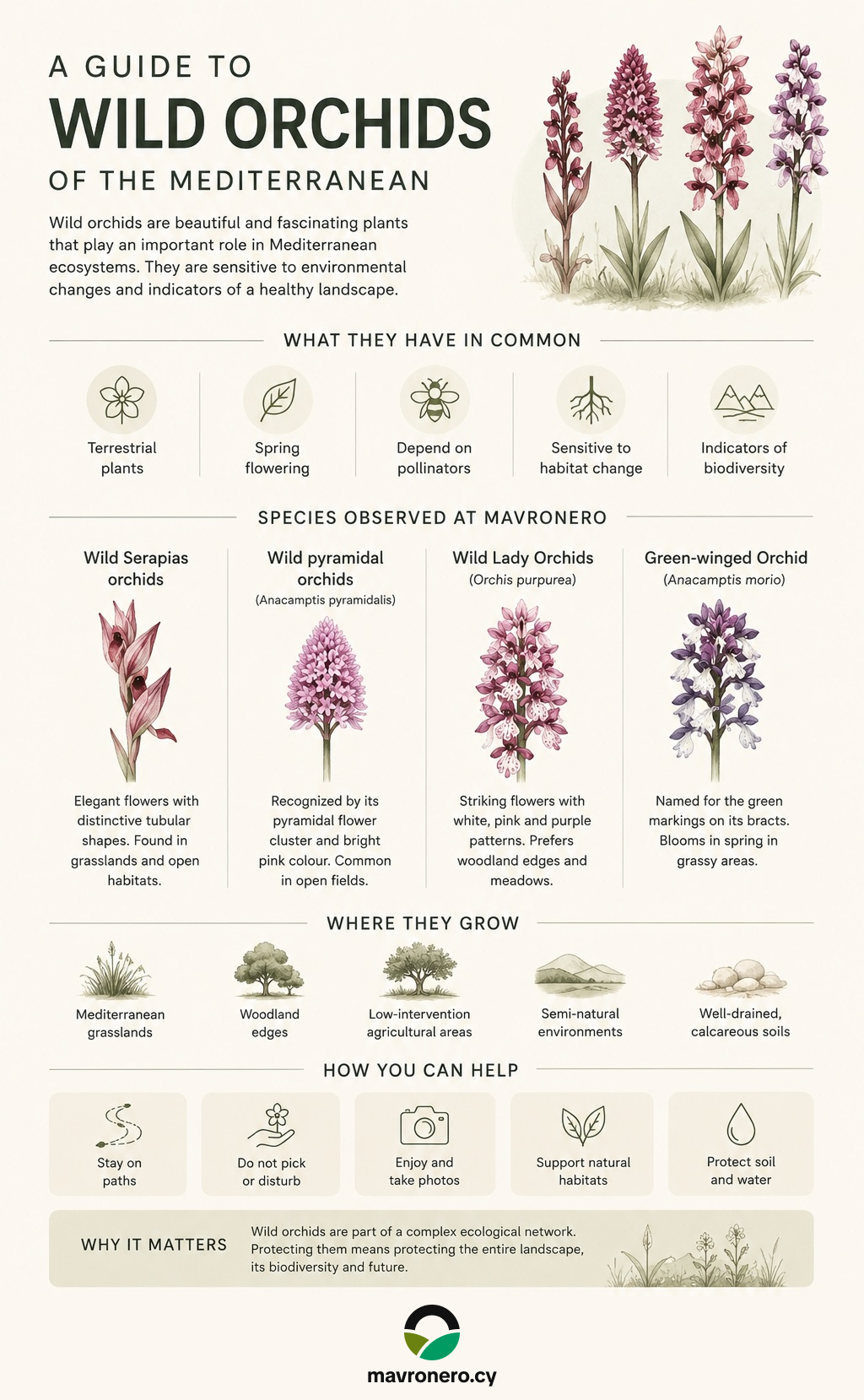
Wild orchid species observed at Mavronero
Several Mediterranean orchid species have recently been documented within the surrounding landscape at Mavronero.
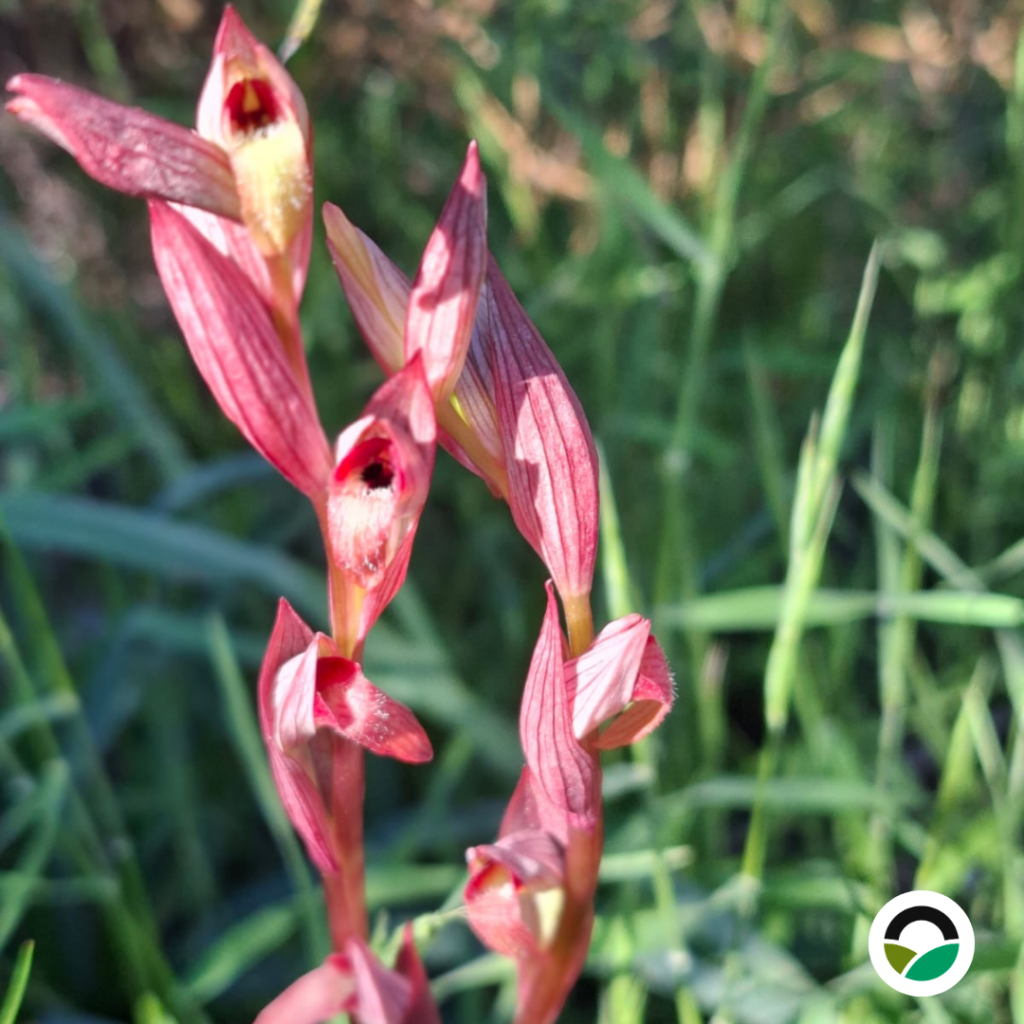
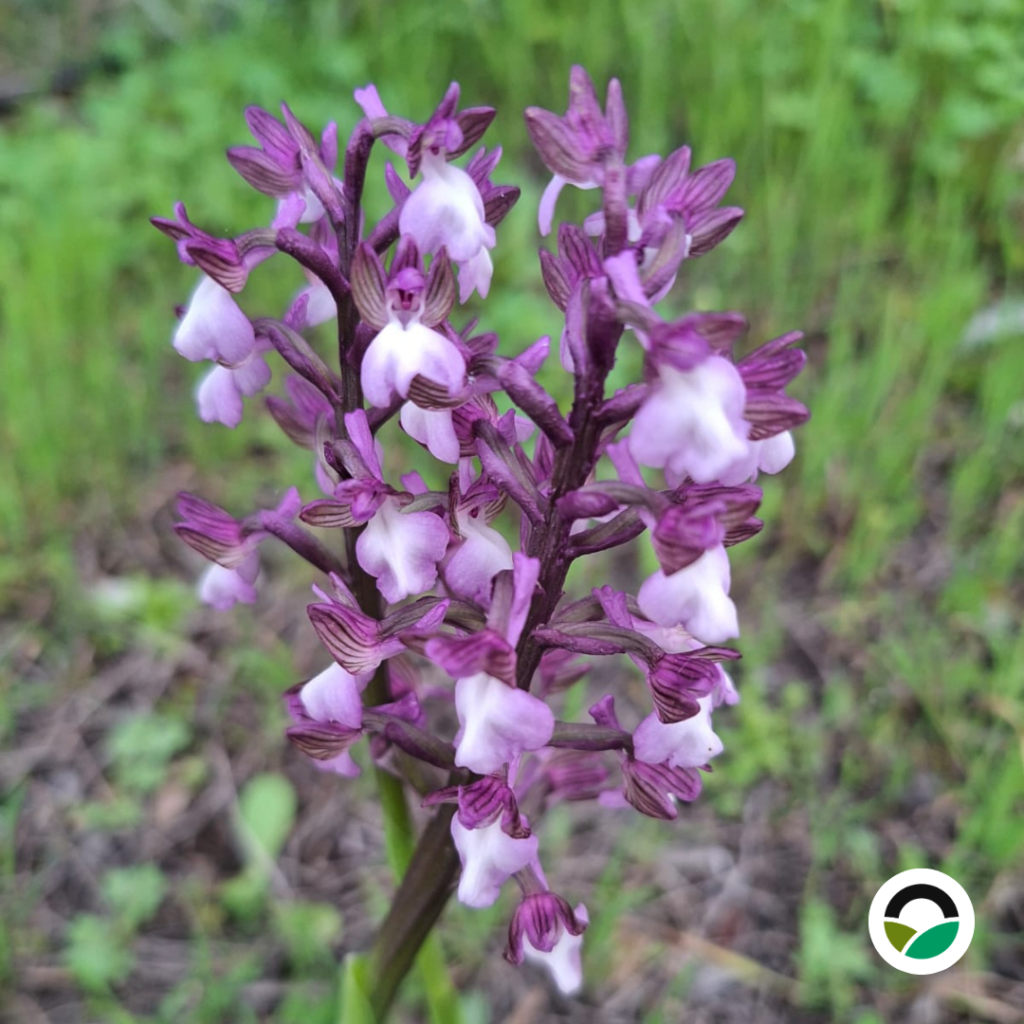
Wild Serapias orchids
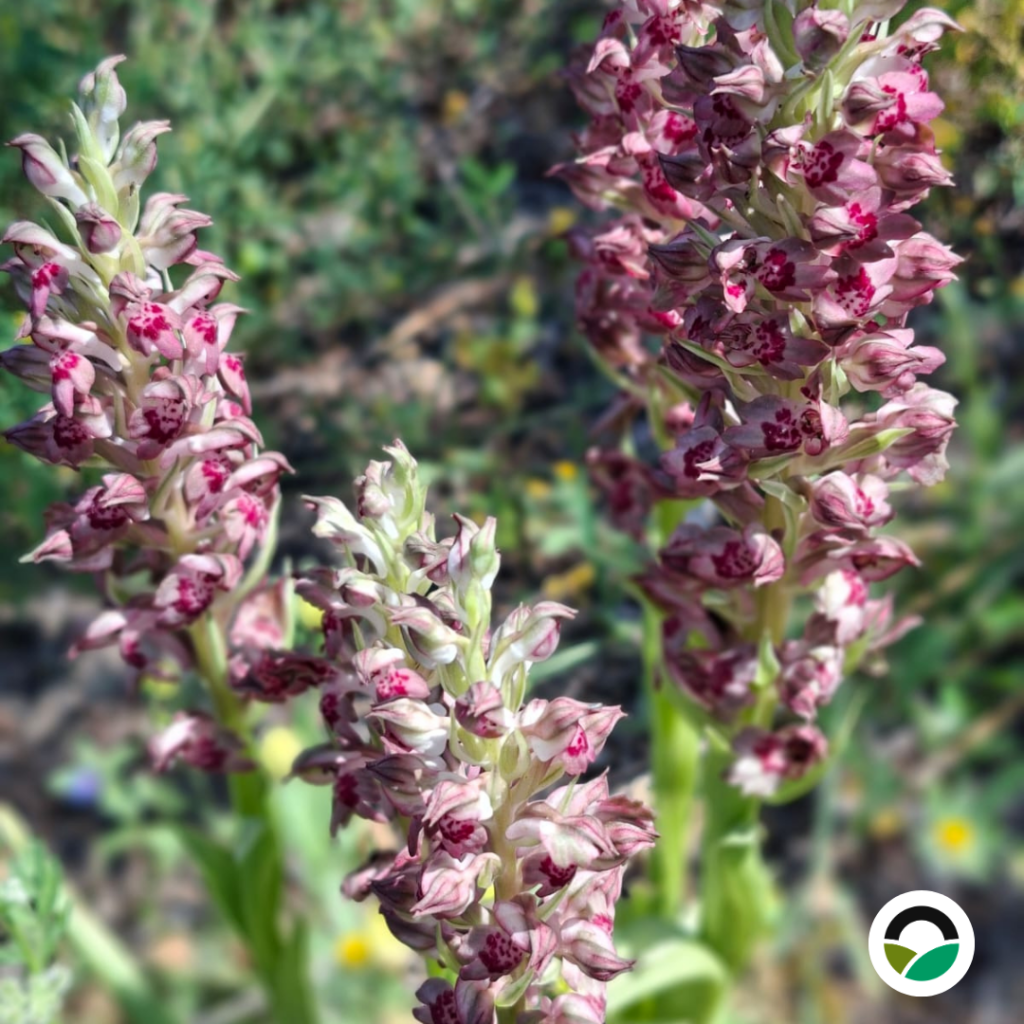
Serapias orchids are characterized by elongated tubular floral structures and are commonly associated with Mediterranean grasslands and low-disturbance habitats.
Read more:
Wild Serapias orchids within the Mediterranean landscape at Mavronero
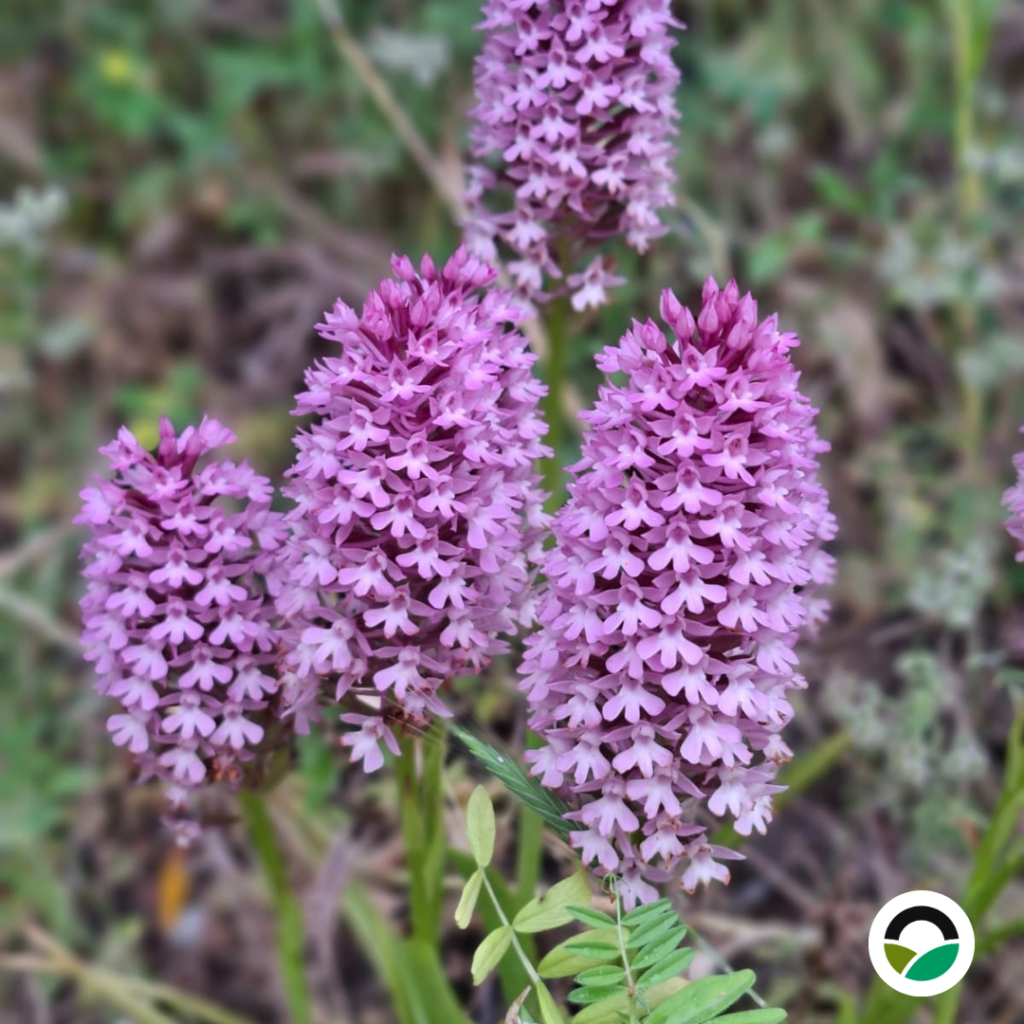
Wild pyramidal orchids (Anacamptis pyramidalis)
Pyramidal orchids are recognized by their dense pyramidal flower clusters and bright pink flowering structures frequently observed in Mediterranean open habitats.
Read more:
Wild pyramidal orchids within the Mediterranean landscape at Mavronero
Wild Lady Orchids (Orchis purpurea)
Lady orchids are among the most visually distinctive Mediterranean terrestrial orchids and are associated with woodland edges and semi-natural habitats.
Read more:
Wild Lady Orchids within the Mediterranean landscape at Mavronero
Green-winged Orchid (Anacamptis morio)
The Green-winged Orchid is a spring-flowering terrestrial species associated with grasslands and low-intervention Mediterranean environments.
Read more:
Green-winged Orchid (Anacamptis morio)
Observation and biodiversity continuity
The observation of wild orchids at Mavronero forms part of broader ecological documentation focused on biodiversity continuity, environmental awareness, and long-term landscape observation.
Rather than being treated as isolated botanical occurrences, these flowering species are understood as indicators of wider ecological interactions involving climate, soil systems, habitat structure, seasonal cycles, and biodiversity relationships.
At Mavronero, environmental observation supports a cultivation philosophy based on:
- low-intervention practices
- ecological continuity
- biodiversity preservation
- seasonal adaptation
- long-term environmental resilience
Conclusion
The presence of Mediterranean wild orchids within the surrounding landscape at Mavronero reflects the ecological complexity that may persist within cultivated rural environments when seasonal ecological processes remain relatively undisturbed.
Through ongoing environmental observation and low-intervention land management, these native flowering species continue to contribute to the biodiversity, seasonal dynamics, and ecological continuity of Mediterranean landscapes.
More broadly, the observation of wild orchids reinforces the relationship between biodiversity preservation, ecological awareness, and regenerative approaches to Mediterranean cultivation systems.
