
The beginning of thyme honey season
One of the unmistakable signs that Mediterranean summer has arrived is the flowering of wild thyme.
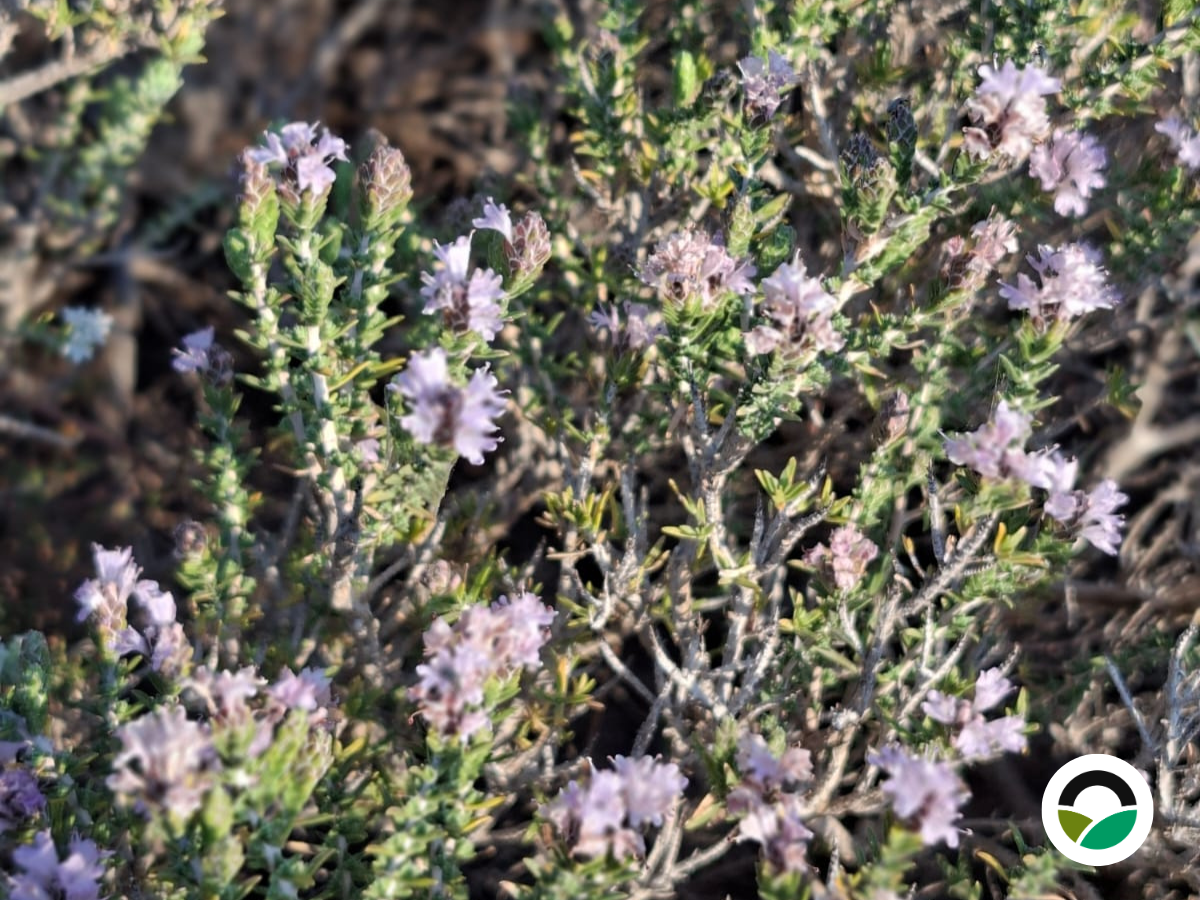
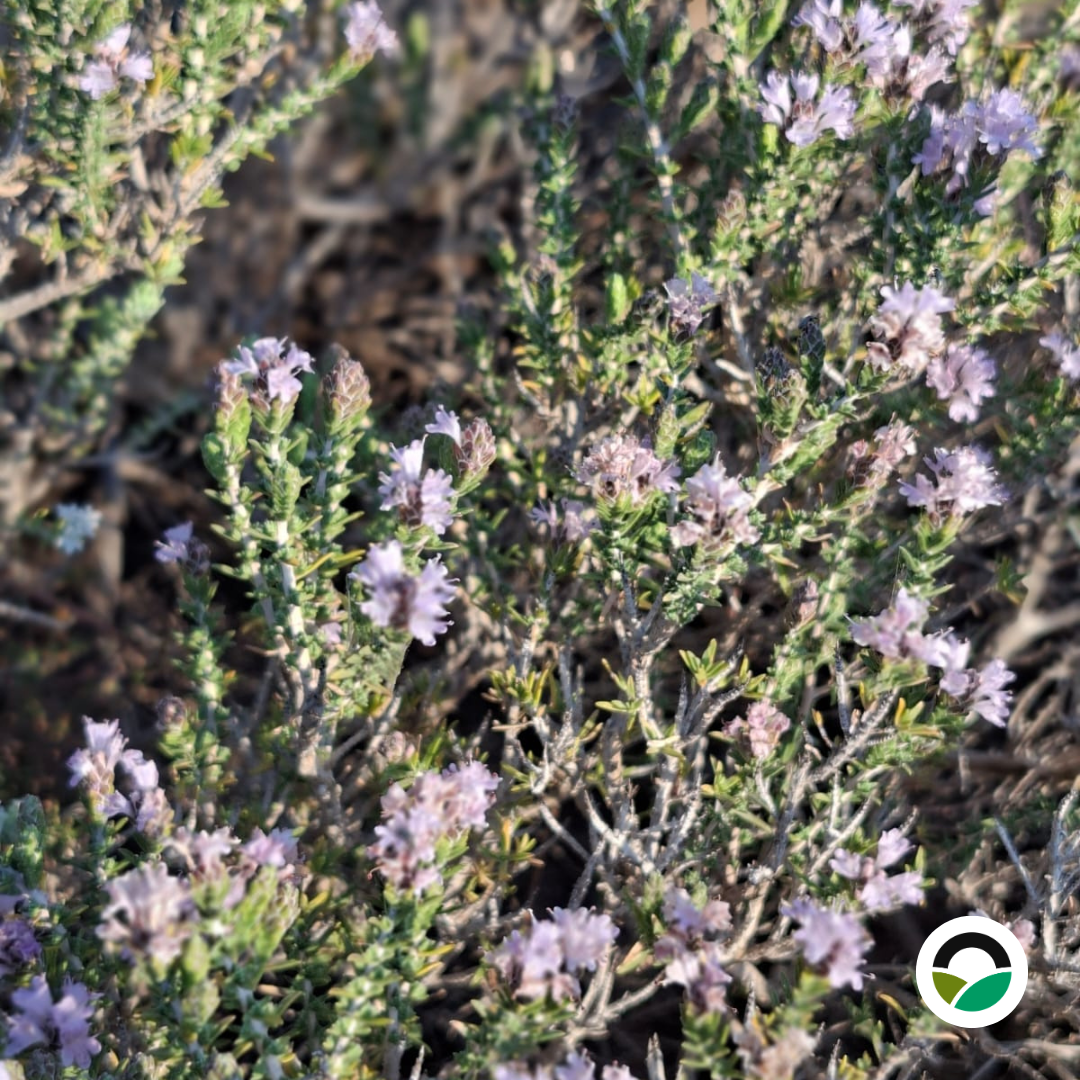
Across the rocky hills surrounding Mavronero, the first blossoms of wild thyme (Thymbra capitata) have begun to open, covering the landscape with delicate pink-purple flowers and a distinctive aromatic fragrance.
Although small in size, these flowers play an important ecological role. Their nectar attracts bees, butterflies and many other pollinating insects, marking the beginning of one of the most important flowering periods of the season.
For Cyprus, this natural event is particularly significant because it signals the start of the thyme honey season, one of the island’s well-known traditional products.
At Mavronero, observing wild thyme in bloom is another reminder that biodiversity often begins with native plants growing exactly where they belong.
What is wild thyme?
Wild thyme (Thymbra capitata) is a perennial aromatic shrub belonging to the mint family (Lamiaceae).
Native to the Mediterranean Basin, it naturally grows on rocky hillsides, dry grasslands and coastal scrublands, where it has adapted to long periods of drought, intense sunshine and nutrient-poor soils.
Unlike cultivated herbs grown in gardens, wild thyme thrives in many Mediterranean environments without irrigation or fertilisers, making it a characteristic plant of these ecosystems.
Its small evergreen leaves contain aromatic compounds that give the plant its intense fragrance and distinctive herbal flavour.
A vital plant for bees and pollinators
As soon as wild thyme begins flowering, it becomes an important food source for pollinators across the landscape.
Its flowers attract a variety of insects, including:
- Honey bees
- Solitary bees
- Bumblebees
- Butterflies
- Hoverflies
- Other native pollinating insects
For many of these species, thyme provides valuable nectar during early summer, when flowering resources may become less abundant across the Mediterranean countryside.
While collecting nectar, pollinators transfer pollen between flowers, allowing plants to reproduce naturally and helping maintain healthy ecosystems.
The story behind Cyprus thyme honey
The flowering of wild thyme is closely connected to one of Cyprus’ celebrated traditional products: thyme honey.
As bees forage across flowering shrubs, they collect nectar and transform it into honey with a characteristic aroma and flavour.
Thyme honey is appreciated as a local food and forms part of the island’s beekeeping traditions.
Its production depends on flowering plants, suitable environmental conditions and healthy pollinator populations.
Protecting native vegetation therefore helps maintain the natural resources on which bees and beekeepers depend.
Note: Honey harvested in areas containing wild thyme does not necessarily consist exclusively of thyme nectar. Its botanical composition depends on the nectar sources visited by the bees.
Natural adaptations to Mediterranean climates
Wild thyme is well adapted to survive Mediterranean summers.
Several characteristics help it thrive where many other plants struggle:
- Small evergreen leaves that help limit water loss.
- Adaptation to dry conditions and seasonal water scarcity.
- Aromatic compounds characteristic of the plant.
- Tolerance of exposed locations and relatively poor soils.
- Flowering during a period when pollinators need available food sources.
These characteristics make wild thyme a valuable component of Mediterranean vegetation.
Wild thyme as a herbal tea
Beyond its ecological importance and culinary uses, wild thyme has a long history of traditional use in Mediterranean herbal preparations.
An infusion made from Thymbra capitata has also attracted scientific interest. A study published in 2023 investigated its chemical composition and explored its antioxidant and anti-inflammatory activity in laboratory experiments. The researchers identified several phenolic compounds, including rosmarinic acid and salvianolic acids. PubMed Central (PMC)
These findings help explain why the plant is of interest to researchers, but they do not establish that drinking wild thyme tea prevents or treats diseases.
How is wild thyme tea prepared?
Herbal infusions are generally prepared by steeping suitable plant material in hot water, allowing some of its water-soluble compounds and aromatic components to pass into the liquid.
For wild thyme, the plant must be correctly identified and confirmed as suitable for consumption before preparing an infusion.
A preparation method should also be based on a reliable recipe for Thymbra capitata intended for drinking. The experimental method used in a laboratory study should not automatically be treated as a recommended household recipe.
At Mavronero Farm, documenting traditional plant knowledge offers an opportunity to explore how Mediterranean communities have used aromatic plants while distinguishing established practices from scientific evidence.
What are the potential benefits of wild thyme tea?
Wild thyme contains naturally occurring compounds that researchers have investigated for their biological properties. However, the evidence needs to be interpreted carefully.
1. Antioxidant activity
A 2023 study found that an experimental infusion of Thymbra capitata showed activity in laboratory tests designed to measure its ability to neutralise certain free radicals.
These results suggest that the plant contains compounds worthy of further investigation. They do not demonstrate that drinking the infusion produces a particular antioxidant benefit in the human body. PubMed Central (PMC)
2. Anti-inflammatory potential
The same study investigated the effects of the infusion on stimulated immune cells in laboratory conditions. The researchers observed changes in several markers associated with inflammatory responses.
These findings provide an interesting starting point for further research, but they do not establish that wild thyme tea can treat inflammation or inflammatory diseases in people. PubMed
3. Traditional herbal use
Wild thyme has been used traditionally in Mediterranean herbal practices. Ethnobotanical research documents a variety of traditional uses for this aromatic species.
Traditional knowledge helps researchers identify plants that may deserve further investigation. However, historical use alone does not establish the safety or effectiveness of a plant for treating a health condition. PubMed
Responsible use of herbal infusions
Wild plants should only be collected for consumption when their identity and suitability for that purpose have been established.
The concentration of plant compounds can vary depending on the plant material, growing conditions and preparation method. Essential oils and concentrated extracts are also different from ordinary water-based infusions and should not be treated as interchangeable.
Herbal teas should not replace medical advice or prescribed treatments. Anyone considering regular medicinal use, particularly during pregnancy, while breastfeeding or when taking medication, should consult a qualified healthcare professional.
More than a culinary herb
Wild thyme has long been valued throughout the Mediterranean for its distinctive aroma and flavour.
Its leaves and flowering parts are associated with several traditional culinary applications, including:
- Seasoning vegetables and other dishes.
- Flavouring marinades and olive oil.
- Preparing aromatic herbal infusions.
- Creating traditional spice blends.
Its characteristic aroma is associated with naturally occurring compounds, including carvacrol and thymol. The composition of the plant can vary according to its growing environment and other factors.
Although wild thyme is well known as a culinary herb, its traditional uses should not be confused with evidence that it can treat medical conditions.
Growing naturally at Mavronero
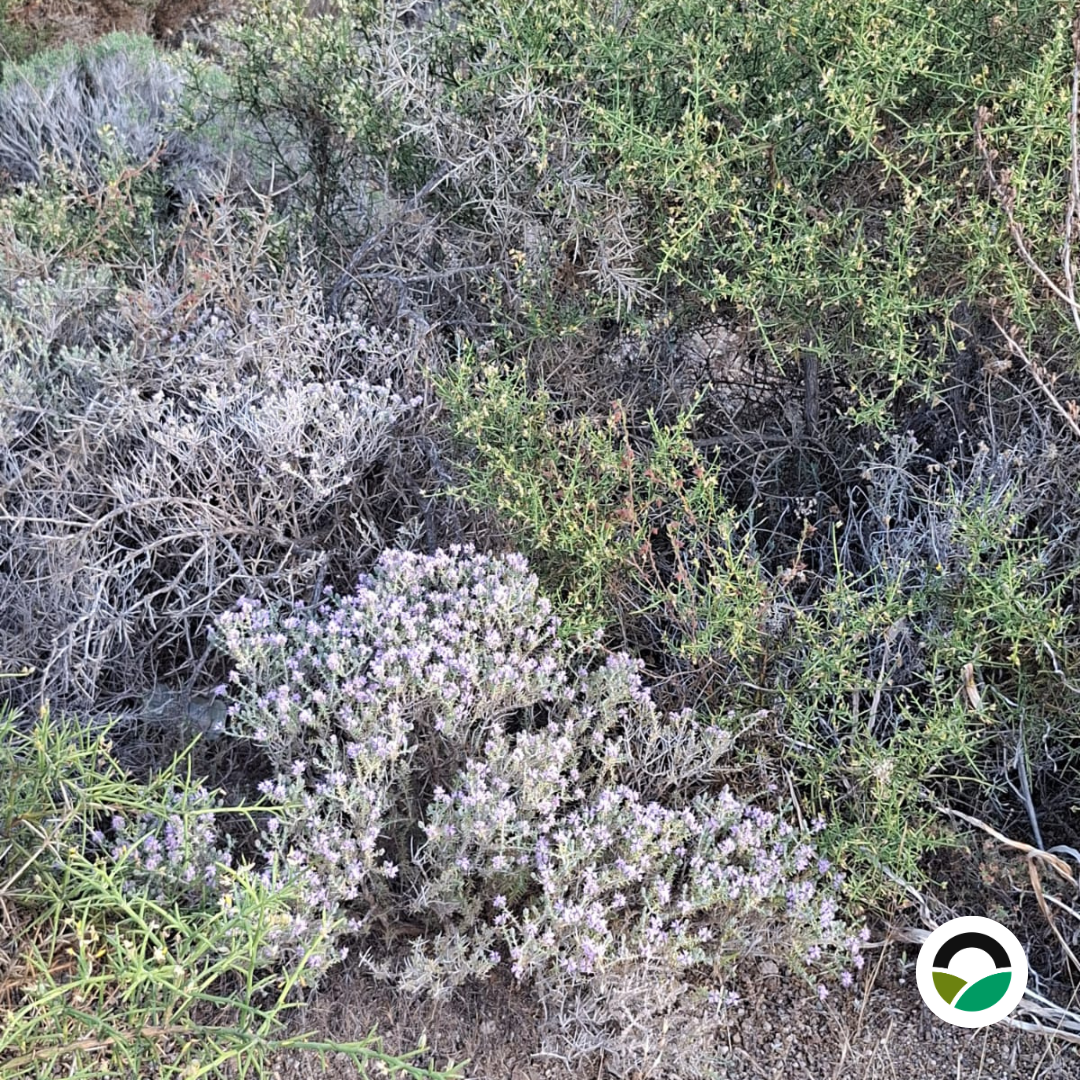
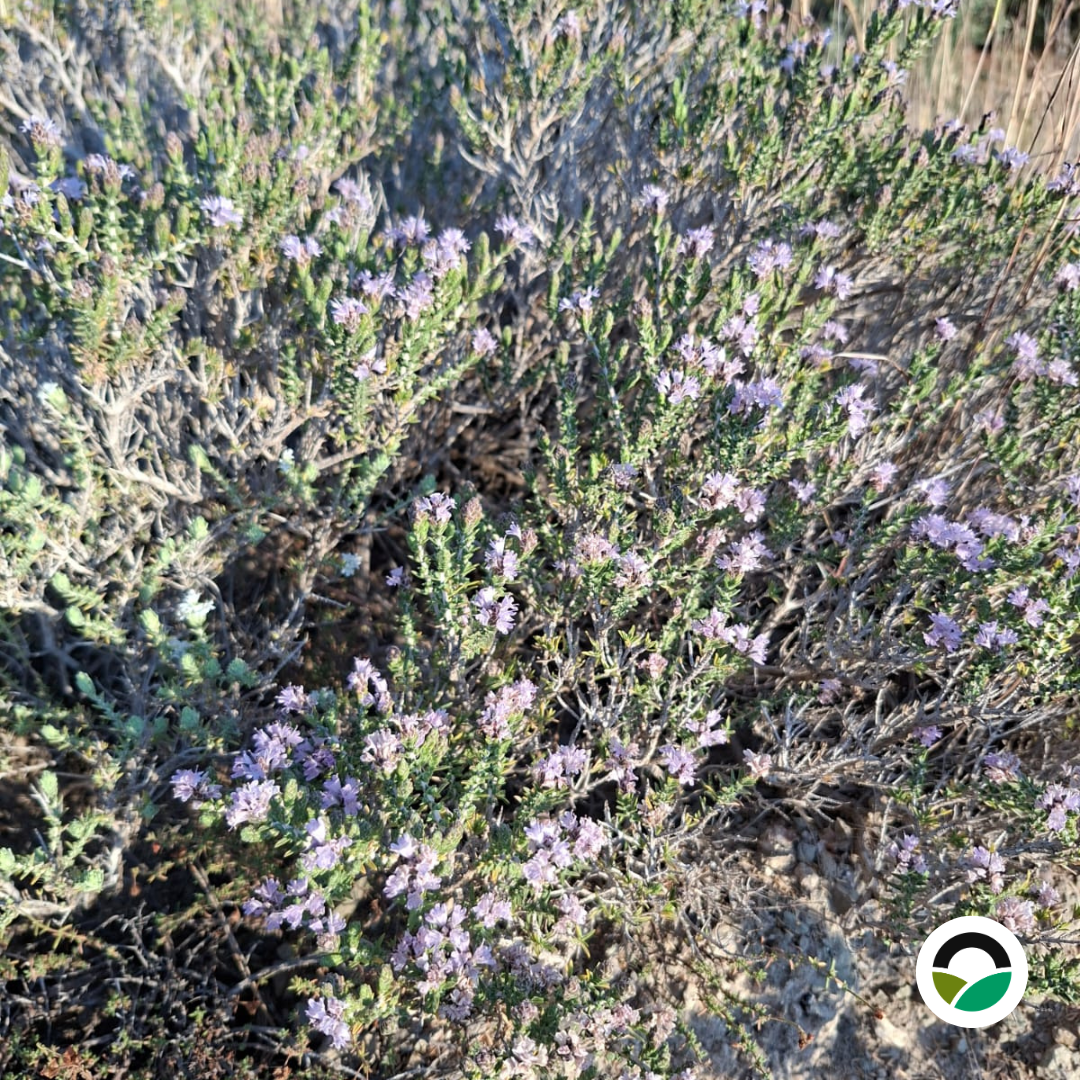
The wild thyme surrounding Mavronero grows naturally among olive trees, rocky slopes and native vegetation.
Rather than being planted or intensively managed, these shrubs form part of the existing Mediterranean landscape.
Every summer, their flowering attracts pollinators and supports the ecological relationships that help maintain the surrounding environment.
These seasonal blooms remind us that biodiversity is not only found inside protected nature reserves. It can also flourish alongside agricultural landscapes when native vegetation and natural habitats are respected.
Curious facts about wild thyme
Wild thyme has several fascinating characteristics:
- It is an aromatic Mediterranean shrub belonging to the mint family.
- Its flowers provide nectar for bees and other pollinating insects.
- It is adapted to dry conditions and exposed Mediterranean habitats.
- Its aromatic compounds contribute to its distinctive fragrance and flavour.
- It has a long history of culinary and traditional herbal use.
- Its flowering period provides an important seasonal resource for pollinators.
Conclusion
The flowering of wild thyme is one of the remarkable events that mark the Mediterranean summer.
Its small flowers support pollinators, contribute to the production of traditional thyme honey and demonstrate the ecological importance of native vegetation.
Beyond its role in the landscape, wild thyme also forms part of the Mediterranean’s culinary and herbal traditions. Scientific research into its infusions is beginning to explore some of the compounds that make this plant particularly interesting, although further evidence is needed before specific health benefits can be established.
At Mavronero Farm, observing and documenting native plants helps us understand the connections between biodiversity, traditional knowledge and sustainable farming.
Every flowering season is another reminder that protecting native vegetation also means protecting the countless species and ecological relationships that depend on it.
