
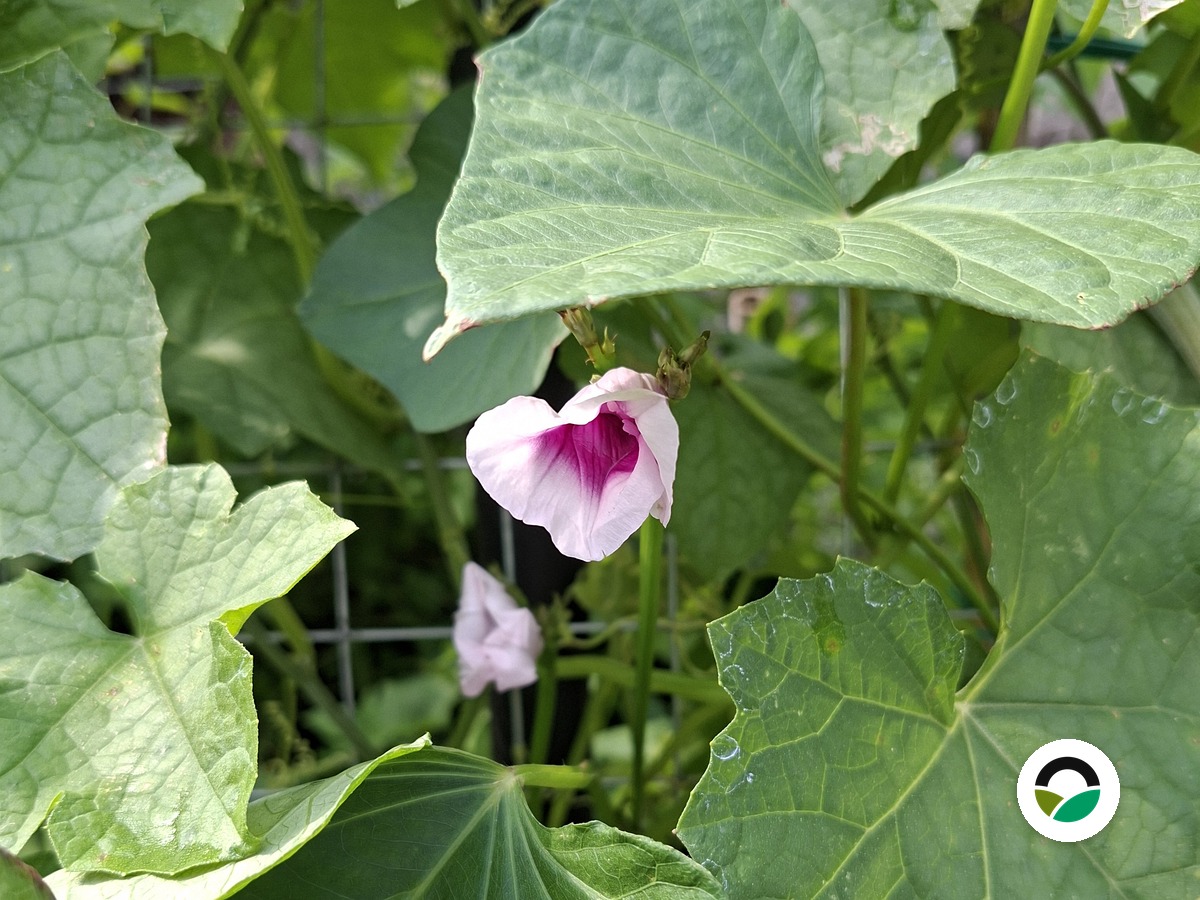
Sweet potatoes do most of their work underground, so a flower in the vegetable bed is a real surprise.
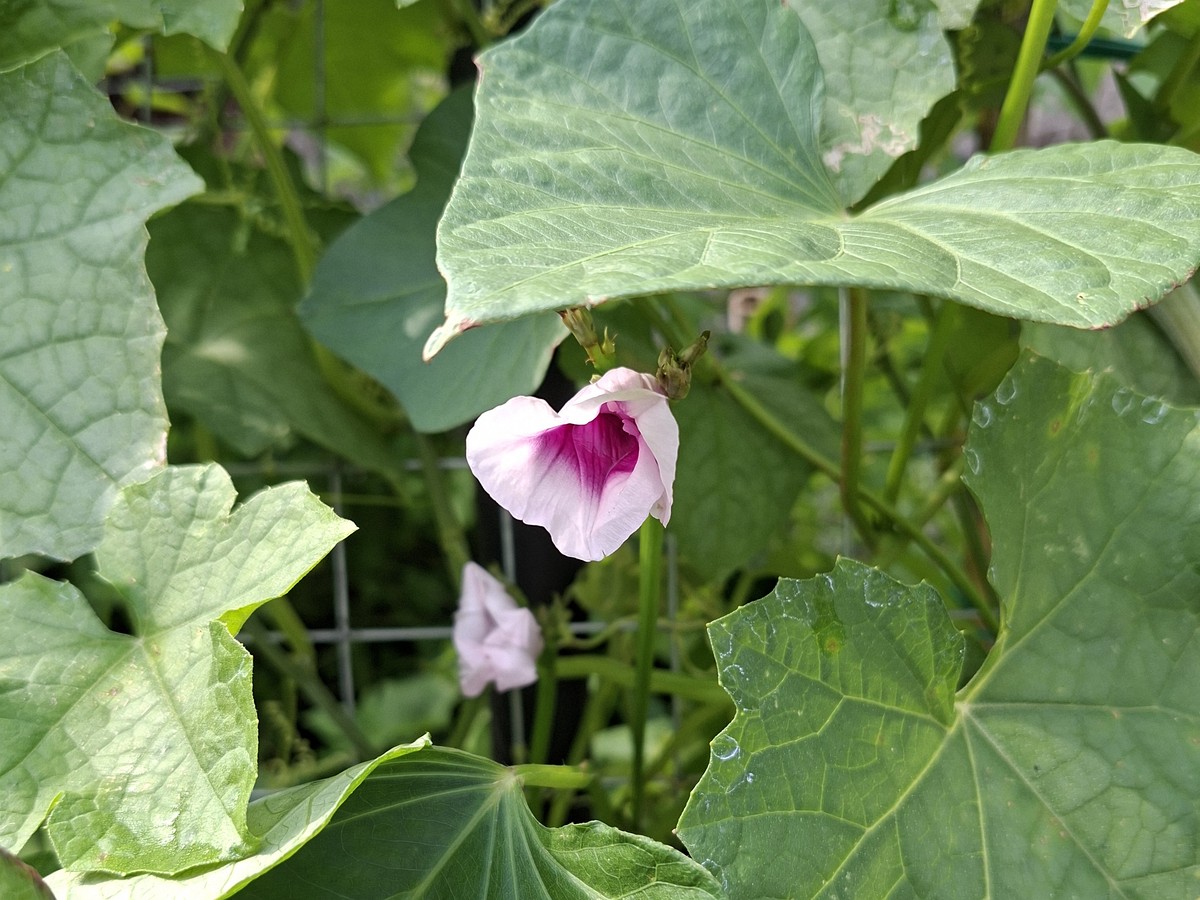
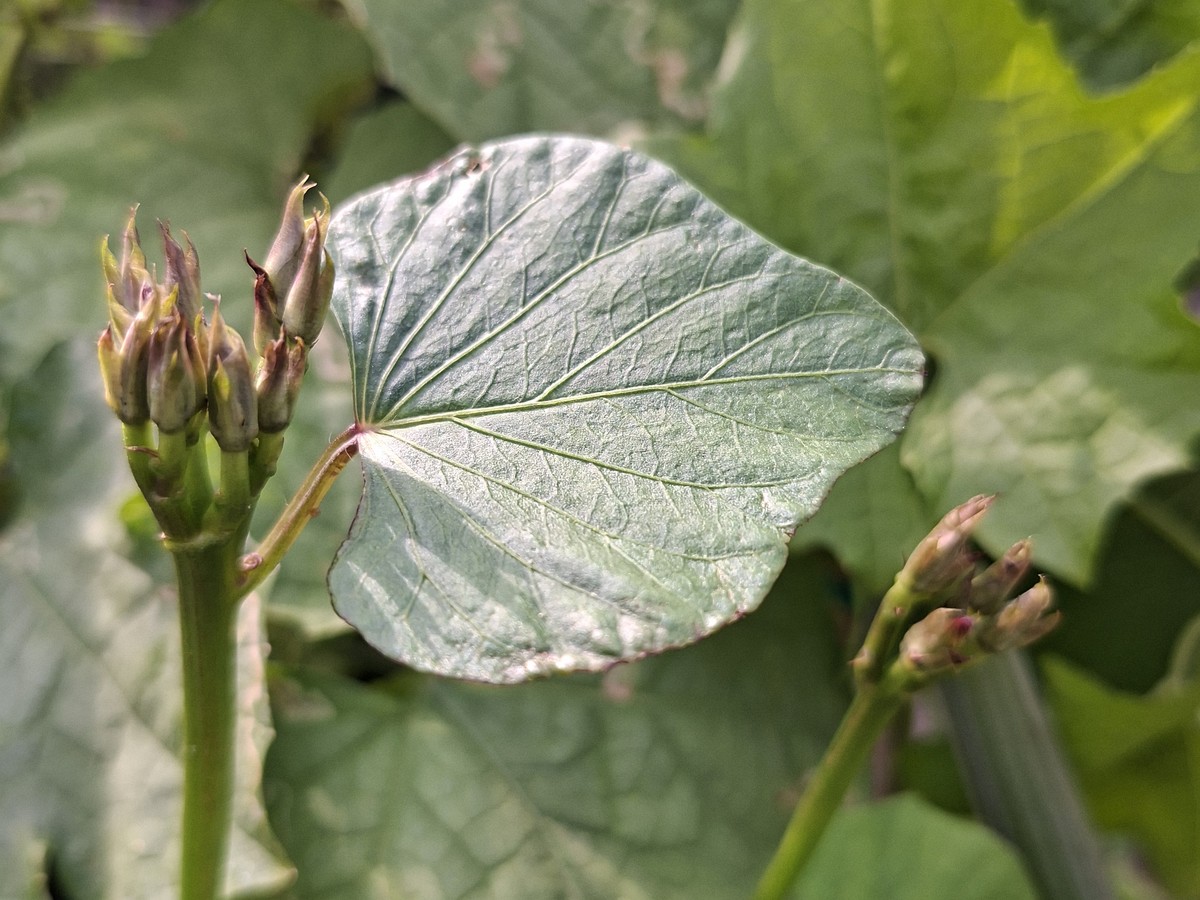
One of the sweet potato plants in our raised beds has produced a pale pink, funnel-shaped flower with a deep magenta centre. A second flower opened close by, and clusters of new buds are developing on another stem.
An unexpected find in the raised bed
We planted these sweet potatoes on 10 September, using sprouts we had rooted at the farmhouse. In early November we spotted the first open flower, half hidden under the large leaves. On another stem, tight clusters of green, purple-tipped buds are still developing.
Why sweet potatoes rarely flower
The flower shape gives away the family connection. Sweet potato (Ipomoea batatas) belongs to the Convolvulaceae, the morning glory family, and its blooms look a lot like those of its ornamental relatives.
How often sweet potatoes flower varies a lot between varieties, and many flower little or not at all. Day length plays an important role: in many varieties, short days encourage flowering. The FAO Ecocrop database notes that flowering is induced at day lengths below about 11 hours, and that little flowering happens beyond 30° latitude. Cyprus lies at around 35°N, which helps explain why a flowering sweet potato is not something you see every day here.
Stress, such as drought or a shortage of nutrients, can also trigger the odd flower in some varieties. We can’t say exactly what prompted this plant to bloom, but the shortening days of autumn are likely to be part of it.
A flower that lasts only a few hours
Sweet potato flowers are short-lived. They open early in the morning and are receptive to pollination only until late morning, and many close again by the end of the day. Most varieties are also self-incompatible, which means a flower usually needs pollen from a different, compatible plant to set seed. Any seeds form in a small capsule and have a very hard coat.
Why we grow sweet potatoes from cuttings
Like most growers, we propagate sweet potatoes vegetatively, from slips: young shoots that grow from a stored sweet potato. Every new plant is a copy of its parent, so we know what to expect at harvest. You can read more about this in Growing sweet potatoes from slips: from propagation to planting.
Plants grown from seed vary widely in root shape and colour, which is why seed is mainly of interest to plant breeders. Seed is so hard to obtain that breeders sometimes graft sweet potato onto morning glory rootstock to make it flower.
For us, the flowers don’t change how we grow the crop. They are a reminder of how much there is to notice in a vegetable bed when you look closely.
Following the season
We’ll keep watching the buds over the coming weeks. To see how an earlier planting turned out, read Harvesting sweet potatoes: from planting to curing.

