
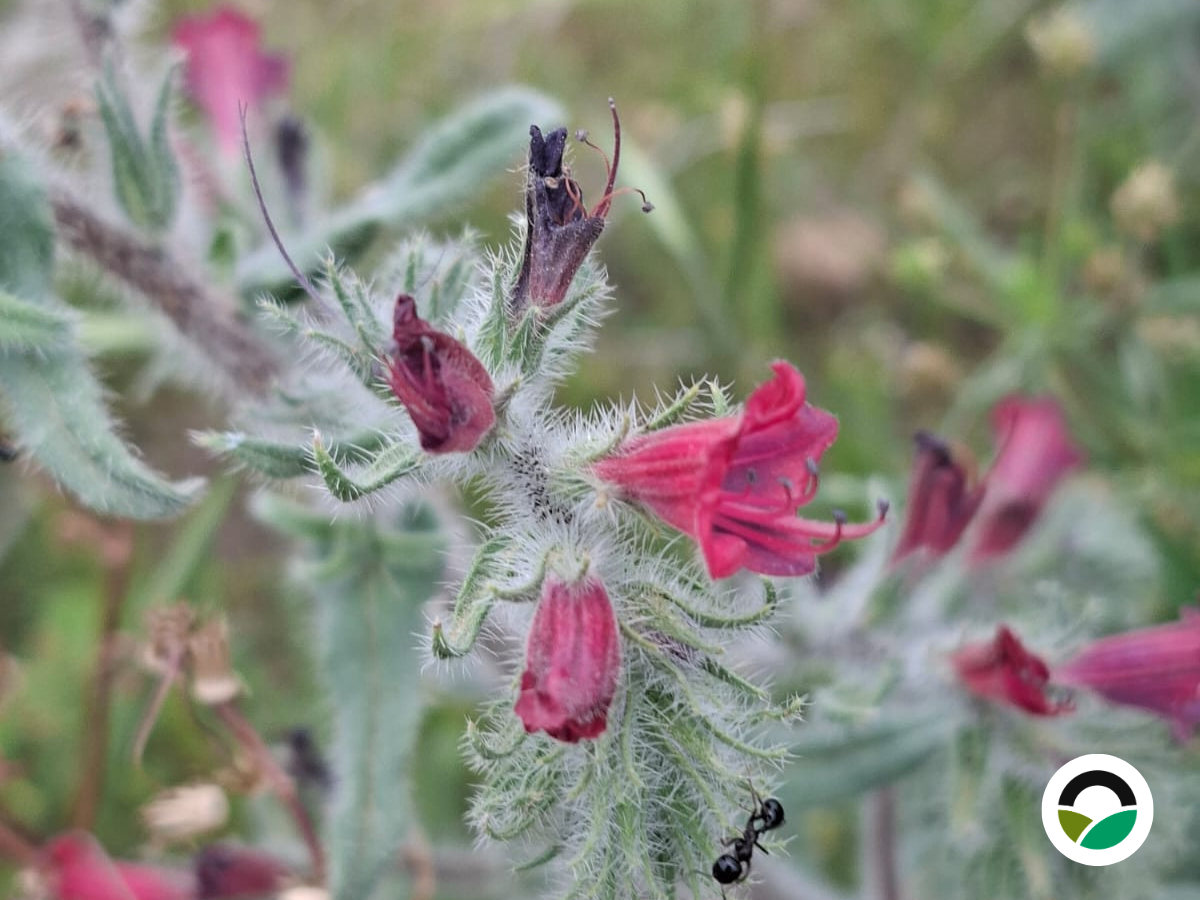
Purple viper’s bugloss (Echium plantagineum) is one of the Mediterranean’s most distinctive wildflowers. With its vivid purple flowers, silvery hairy leaves and exceptional drought tolerance, it plays an important ecological role by providing nectar for a wide variety of pollinating insects throughout spring.
A resilient Mediterranean wildflower
Native to the Mediterranean region, purple viper’s bugloss naturally grows in grasslands, open fields, roadsides and disturbed soils. It is well adapted to environments with limited water and poor soils, making it an excellent example of how native plants have evolved to thrive under Mediterranean climatic conditions.
Its dense covering of fine hairs helps reduce water loss by reflecting sunlight and limiting evaporation, allowing the plant to remain productive even as temperatures increase.
An important source of nectar
The tubular flowers of Echium plantagineum are rich in nectar and attract a diverse community of insects throughout the flowering season.
Bees, butterflies, hoverflies and even ants regularly visit the flowers, contributing to pollination while benefiting from one of the many food sources available in Mediterranean habitats.
Healthy populations of flowering native plants are essential for maintaining pollinator diversity and supporting resilient ecosystems.
Adapted to seasonal change
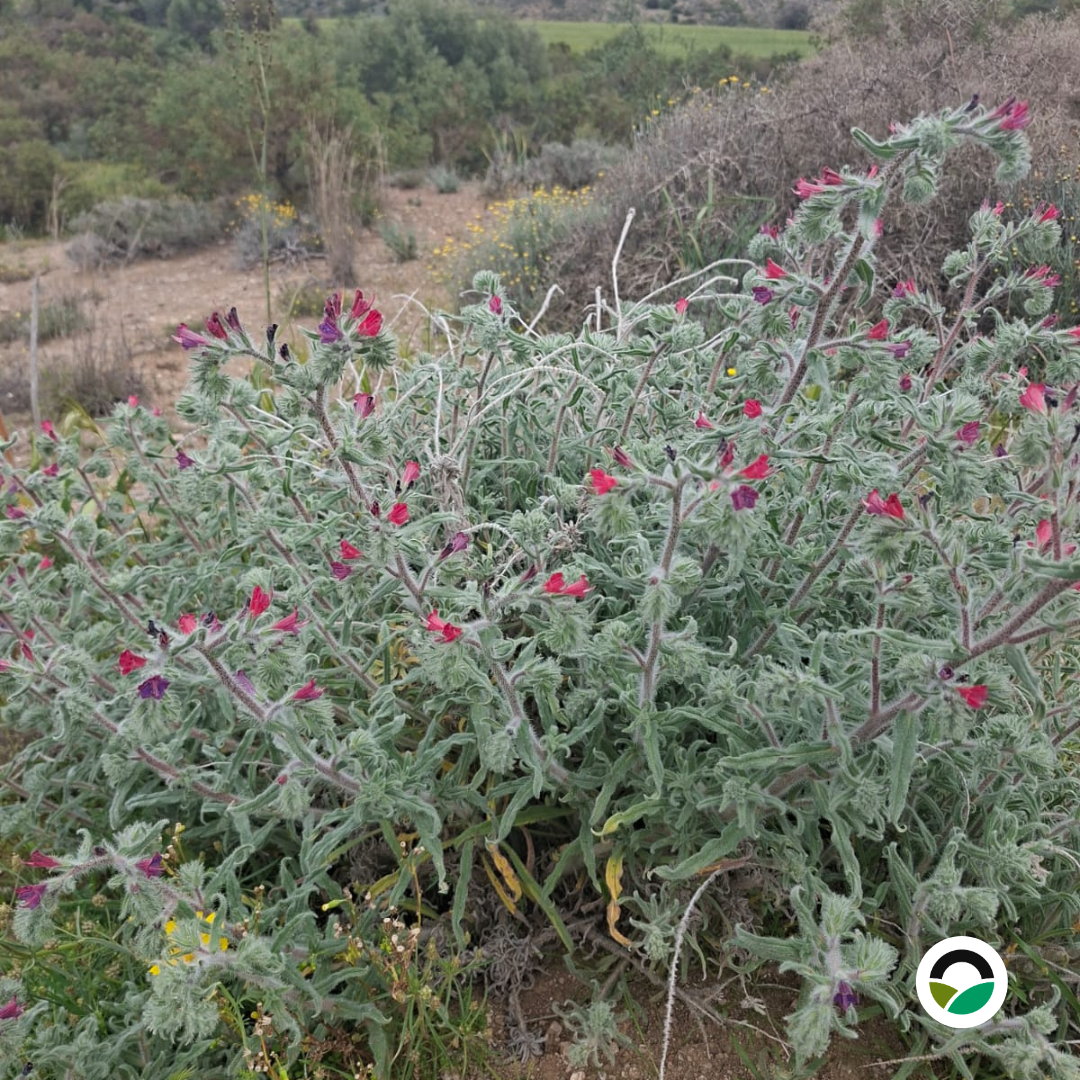
Purple viper’s bugloss is an annual species that completes its life cycle before the driest period of the year.
After flowering, each plant produces numerous seeds that remain dormant in the soil until autumn and winter rains create favourable conditions for germination. This seasonal strategy allows the species to reappear year after year despite long periods of summer drought.
Observations at Mavronero
During recent biodiversity observations at Mavronero Farm, purple viper’s bugloss was found growing naturally across open areas of the landscape.
Its bright flowers were attracting insects, highlighting its ecological importance as a valuable nectar source within the farm’s diverse Mediterranean habitat.
These observations help us better understand how native plant communities support wildlife while demonstrating remarkable resilience to local environmental conditions.
Why native wildflowers matter
Native flowering plants form the foundation of healthy Mediterranean ecosystems.
By providing food, shelter and breeding resources for insects and other wildlife, they contribute to ecological balance and improve the resilience of natural landscapes.
Protecting these species also supports regenerative farming by encouraging biodiversity, strengthening pollinator populations and maintaining healthy ecological interactions across the farm.
Interesting facts
- Purple viper’s bugloss belongs to the borage family (Boraginaceae).
- The scientific name is Echium plantagineum.
- Its flowers are highly attractive to bees and many other pollinating insects.
- Fine hairs covering the leaves and stems help reduce water loss.
- It completes its life cycle before the peak of the Mediterranean summer.
- Each plant can produce hundreds of seeds for the following growing season.
Conclusion
Although often overlooked, purple viper’s bugloss is an important component of Mediterranean biodiversity. Its ability to thrive in dry conditions while supporting numerous pollinators illustrates the remarkable adaptations of native flora.
At Mavronero Farm, documenting species such as Echium plantagineum helps us better understand local ecosystems and reinforces the importance of conserving native vegetation as part of regenerative agriculture.
